

 By
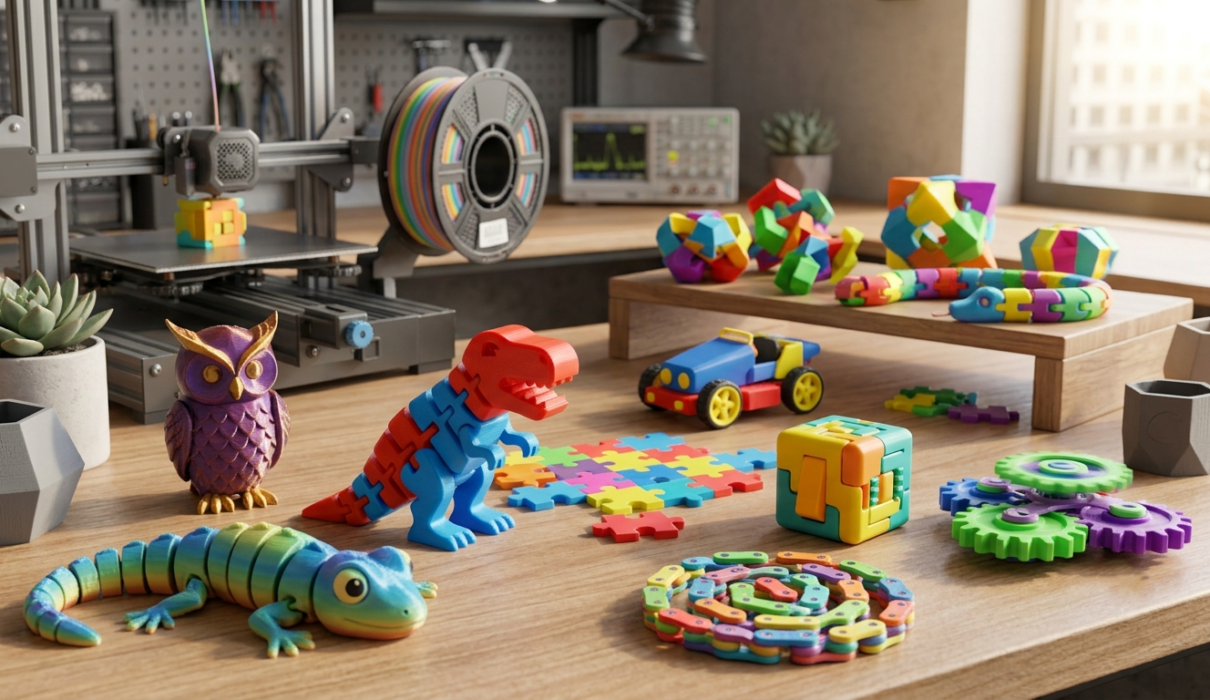
By At first glance, it looks like just another small plastic toy — a cube, a chain of connected links, maybe a tiny gear assembly that clicks when you spin it. But there’s something about 3D printed fidget toys that pulls people in more than the object itself would suggest. Part of it is the tactile appeal, the same reason people click pens or twirl rings around their fingers. Part of it is something a little different: watching a printer produce an object that already moves, with no glue and no assembly, straight off the build plate.
That second part is what got a lot of people into this specific corner of 3D printing. It’s one thing to print a static object — a vase, a bracket, a keychain. It’s a different feeling entirely to watch a printer finish a job and realize the thing it just made has joints, and those joints actually work.
This isn’t a list of ten fidget toys to print this weekend, though a few ideas will come up along the way. It’s more about understanding what’s actually going on with these designs — why some are easy and others fight you, what filament choices actually change, why “print-in-place” is both the most impressive and the most finicky category, and what beginners tend to get wrong. If you’ve already tried one and it came out fused solid instead of moving, this should fill in some of the gaps.
What Are 3D Printed Fidget Toys?
At the simplest level, a 3D printed fidget toy is any small, tactile object made on a 3D printer that’s designed to be handled, spun, clicked, or manipulated rather than just looked at. That’s a broad definition on purpose, since the category covers a lot of ground — everything from a simple spinning gear to a fully articulated dragon with dozens of interlocking segments.
What separates fidget toys from most other things people print is the emphasis on interaction. A phone stand does its job by sitting still. A fidget toy does its job by moving, and that changes what actually matters during design and printing. Tolerances matter more. Print orientation matters more. And printer calibration starts to matter in ways it doesn’t for a static object, since a joint that’s fused shut isn’t really a fidget toy anymore — it’s just a strange-looking paperweight.
Why 3D Printed Fidget Toys Are So Popular
Part of the appeal is how approachable these prints are compared to other categories of 3D printing. You don’t need engineering software experience to get started, and a lot of popular designs are shared freely online, ready to print without modification.
There’s also a novelty factor that doesn’t really wear off. If you’ve ever handed someone a print-in-place object and watched their face when they realized it moved right off the plate, the reaction is almost always the same — a slight pause, then genuine surprise. That’s a big part of why these designs spread so widely; they’re inherently shareable in a way a lot of practical prints aren’t.
And there’s a cost angle. Fidget toys are small, so they don’t demand much filament or print time compared to larger projects — a reasonable entry point for someone new to 3D printing who wants a quick, satisfying result.
The Best Types of Fidget Toys to 3D Print
There isn’t one correct answer here, since “best” depends on what you’re looking for — something quick and low-risk for a first print, something mechanically interesting, or something that looks impressive when finished.
Articulated and Print-in-Place Fidget Toys
This is probably the category that gets the most attention, and for good reason. Articulated designs — often animals, but also chains, snakes, and other segmented shapes — print as a single connected object with multiple moving joints already built in.
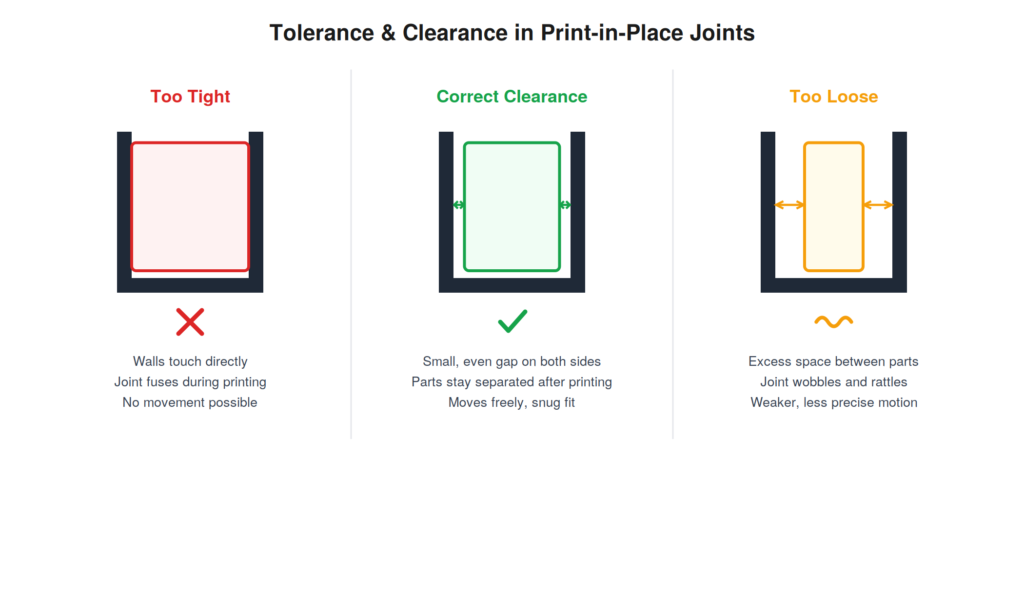
What’s interesting about these designs is that the whole object comes off the build plate essentially finished. There’s no separate assembly step gluing tiny pieces together. Instead, the printer lays down each segment with a deliberate gap between it and its neighbor, small enough that the two pieces stay connected, but not so small that they fuse into one solid mass.
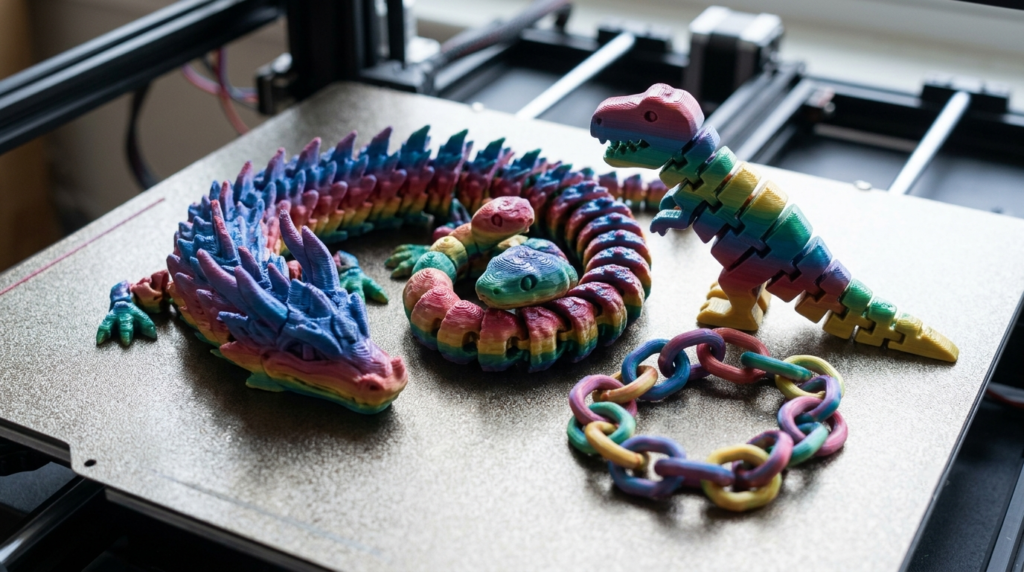
That gap is the whole trick, and it’s also where things go wrong for a lot of beginners. If the tolerance is too tight, or the first layer squishes slightly wider than intended, adjacent parts can bond together during printing. The joint that’s supposed to move ends up solid, often with no way to fix it afterward without breaking the object.
Print-in-place designs are genuinely satisfying when they work, but not every printer produces good results on every file without some calibration first. A printer with an inconsistent first layer or an untuned flow rate is more likely to fuse joints than one that’s been properly leveled — a clear real-world reason calibrating a printer matters beyond just making prints look nicer.
Fidget Cubes, Spinners, Clickers, and Other Designs
Not every fidget toy relies on articulated joints. Fidget cubes — small blocks with different mechanisms on each face, like buttons, switches, or rollers — are popular partly because each face can be designed and printed somewhat independently.
Spinners are about as simple as this category gets mechanically, though the feel depends on how smoothly the central bearing or printed pivot works. Some designs use an actual inserted bearing; others rely entirely on printed plastic-on-plastic rotation, which feels less smooth but is simpler to print since there’s nothing to source afterward.
Clickers and sliders are a nice middle ground, usually involving a small number of moving parts, sometimes snapped together, sometimes designed with clearance to move without ever fully separating — a good project slightly more involved than a static print without the tolerance challenges of full print-in-place.
Infinity cubes, chain-style fidgets, and small gear assemblies round out the broader category. Infinity cubes fold and unfold through hinged smaller cubes, visually interesting but demanding on hinge tolerance. Gear-based fidgets are satisfying to watch but depend heavily on consistent tooth dimensions — a gear that’s even slightly off-size can bind against its neighbors instead of turning freely.
What Filament Is Best for Fidget Toys?
This is one of those questions without a single right answer. The honest answer is that it depends on what the toy needs to do and how much you’re willing to fight the material to get there.
PLA vs PETG vs Other Materials
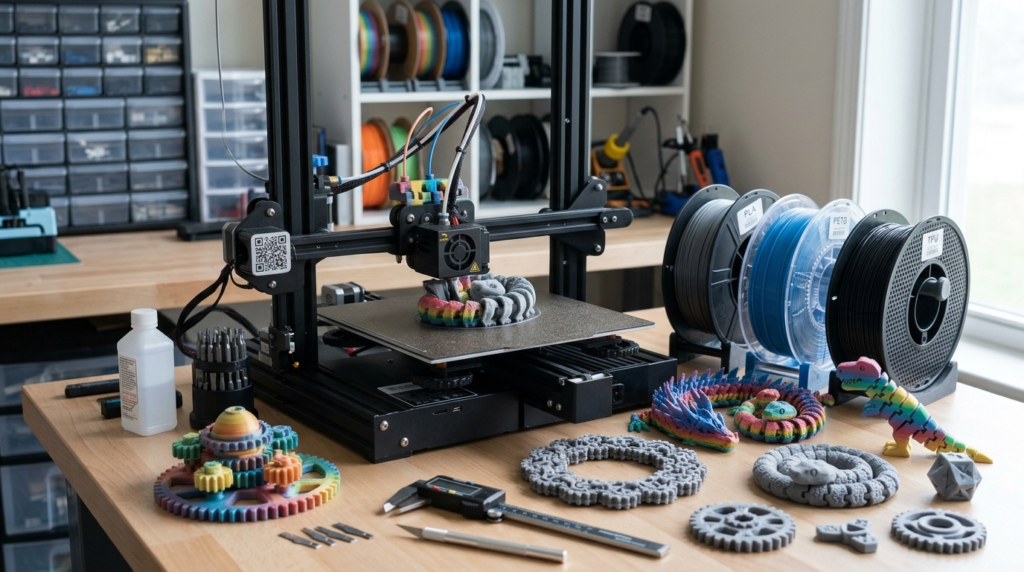
PLA is where most people start, and for good reason — it’s the easiest material to print reliably, doesn’t require a heated enclosure, and holds fine detail well, which matters for smaller joints. For most fidget toys, especially print-in-place designs where consistent extrusion keeps tolerances accurate, PLA is a genuinely sensible default rather than just a beginner’s compromise. The trade-off is that PLA is more brittle than some alternatives, and can be prone to snapping under repeated stress in a toy that gets handled and dropped constantly.
PETG steps in when durability matters more than ease of printing. It’s tougher and somewhat more flexible than PLA, an advantage for parts that flex repeatedly or take the occasional drop. The trade-off is that PETG tends to be a little stringier and less forgiving with tight tolerances, since it behaves differently in how it cools and oozes between features.
Flexible filaments like TPU open up a different category entirely — squeezable, bendable objects that don’t rely on rigid joints. TPU isn’t as beginner-friendly as PLA, generally needing slower speeds and more careful retraction tuning, but for the right design it produces a feel rigid filaments can’t replicate.
None of this means one filament is universally “the best.” It depends on the specific design, how the toy will be used, and how much printing experience you’re willing to apply to getting a trickier material to behave.
Recommended 3D Printing Supplies
Affiliate Disclosure: This article may contain affiliate links. If you purchase a product through one of these links, I may earn a small commission at no extra cost to you. I only recommend products that are relevant to 3D printing and the topics covered in this article.
| Product | Best For | Why Consider It | Price |
|---|---|---|---|
| PLA Filament | Fidget toys & beginners | Easy to print, good detail | Check Price |
| PETG Filament | Durable toys | More impact resistant | Check Price |
| 3D Printer Nozzle | Fine details | Useful for small toy designs | Check Price |
| Digital Caliper | Measuring tolerances | Helps with precise dimensions | Check Price |
| Deburring Tool | Finishing prints | Removes sharp edges | Check Price |
3D Printing Settings That Matter
A lot of what makes or breaks a fidget toy print comes down to settings that seem minor individually but compound into a real difference in the final result.
Layer height affects surface finish and, for some mechanisms, how cleanly small features resolve — a finer layer height generally captures gear teeth or thin connecting points more accurately, though at the cost of longer print times. Wall count and infill matter more for durability than most people assume; a toy that gets squeezed and dropped benefits from slightly more wall thickness than the bare minimum, even though higher infill doesn’t add much for small parts under light structural load.
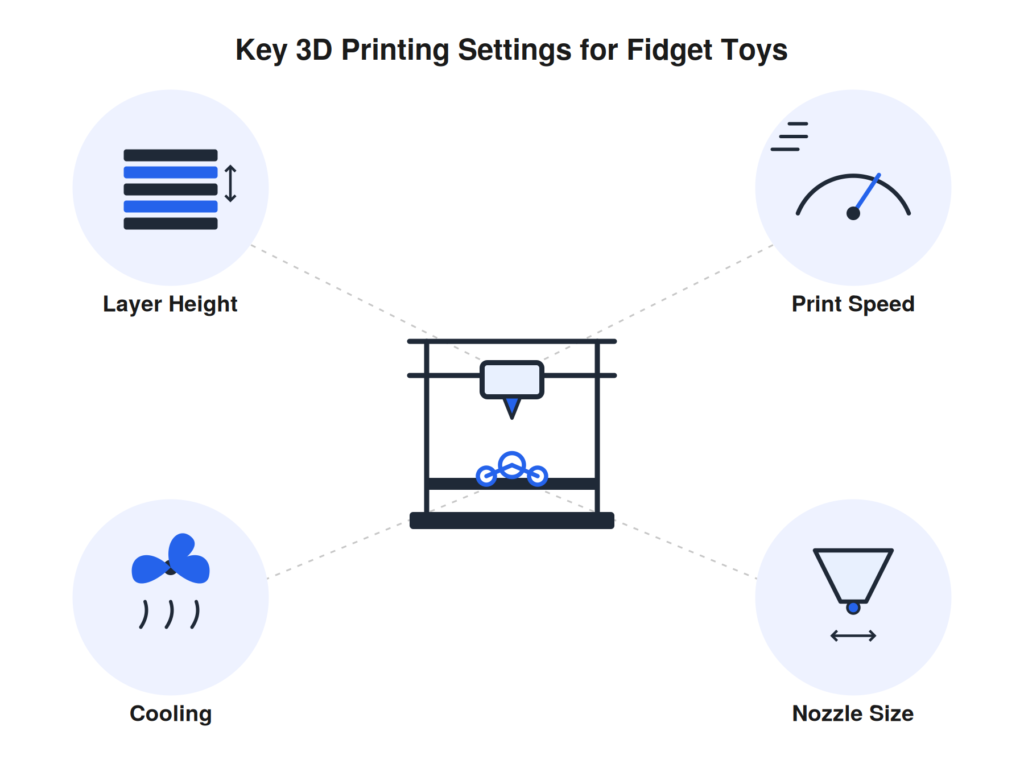
Print speed and cooling work together in ways that are easy to overlook — faster prints with insufficient cooling can lead to rounded or blobby small features, which matters more here since fidget mechanisms often depend on precise edges. Nozzle size plays a role too; a standard 0.4mm nozzle handles most designs fine, but extremely small or intricate joints sometimes print more cleanly with a smaller one, at the cost of longer print times.
First-layer quality and bed adhesion deserve their own mention, since a print-in-place design that shifts even slightly can throw off tolerances enough to cause fusing — often the actual root cause when a moving-part print comes out solid instead of articulated.
Tolerances — the gap size between moving parts — are usually set by the model’s designer, often given as a range or a note suggesting the value might need adjusting for a specific printer. There isn’t one number that works universally, since dimensional accuracy varies from printer to printer even at supposedly identical settings. Treating any suggested tolerance as a starting point rather than a guarantee saves some frustration.
How to Get Smooth-Moving Parts
Beyond individual settings, a few practical habits help. Printing a small calibration or tolerance test — often shared alongside popular print-in-place designs specifically for this purpose — before committing to a full model reveals whether a printer’s default tolerance will bind or move freely, without wasting filament on a full-sized failure.
Orientation matters too. Some designs are meant to print flat, with joints oriented so gravity and layer adhesion work in their favor. And patience during removal genuinely matters — a freshly printed articulated toy can feel stiffer right off the plate than it will after being worked a few times, since minor stringing or slight over-extrusion between joints often loosens up with gentle movement. Forcing a joint that seems stuck, rather than working it gently, is a common way to snap a thin connecting point that would have loosened on its own.
Common Problems When Printing Fidget Toys
Fused joints are the most common complaint, almost always tracing back to tolerances too tight for that specific printer, combined with slight over-extrusion or a first layer that squished wider than intended.
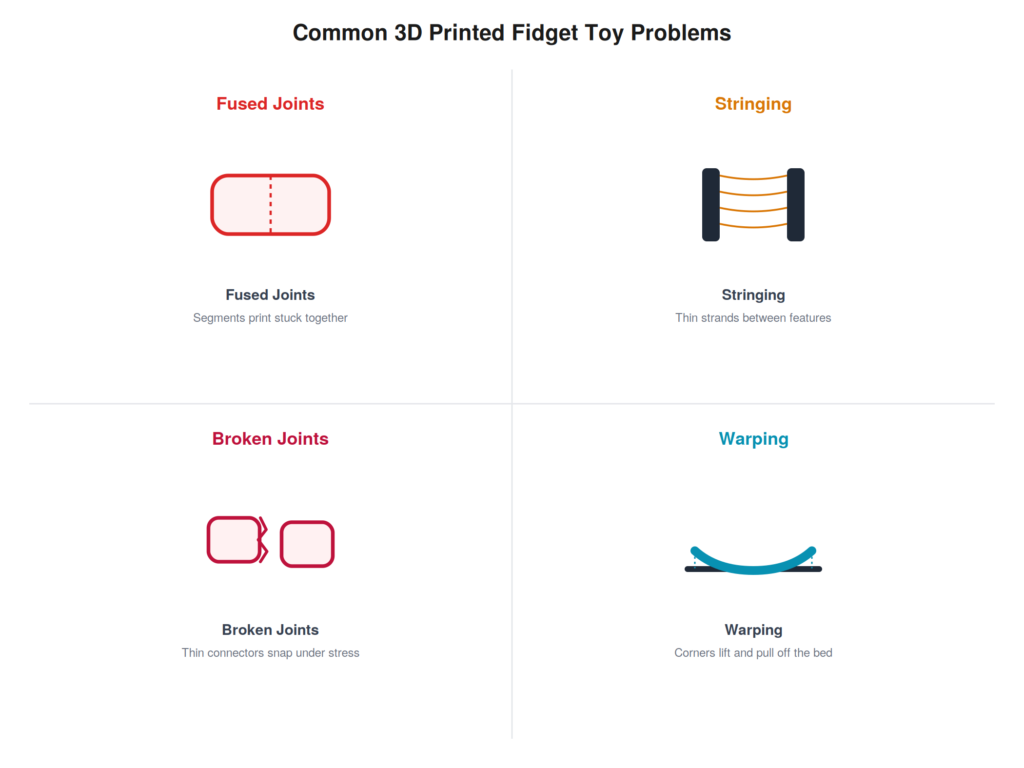
Stringing between small features is another frequent issue, particularly with designs that have a lot of short travel moves between segments — largely a retraction and temperature tuning problem, but more visible here since there are more small gaps for stray strings to bridge.
Snapped joints happen, especially with PLA, when someone forces a tight connection instead of working it loose gradually. Thin connecting points are often the most fragile part of the design by necessity — thin enough to allow movement, which also makes them the weakest structural point.
And warping or slight dimensional drift, even on a small object, can throw off a print-in-place design’s tolerances without ruining the print in any obviously visible way. A print can look completely successful and still not move the way it’s supposed to.
How to Customize 3D Printed Fidget Toys
One of the more genuinely appealing things about this category is how easy it is to make a design your own without starting from scratch. Basic scaling changes size. Swapping filament color changes the entire feel of an object without touching the model file. Multi-color printing, adding a logo or pattern, offers a level of personalization a lot of people find satisfying even without real design skill.
For people with some CAD experience, existing open designs can often be modified more directly — adjusting a joint’s tolerance, changing a gear’s tooth count, or combining features from more than one design into something new. This is where 3D printing starts to feel less like following a recipe and more like actually creating something, even if the underlying idea started elsewhere.
Worth being clear: modifying and printing a design for personal use is very different from taking someone else’s copyrighted work and treating it as your own, especially if money changes hands. Respecting the terms a designer attached to their file matters, even when it’s tempting to skip that step.
Are 3D Printed Fidget Toys Safe?
This deserves a straightforward, non-alarmist answer: it depends on the object, the material, and who’s using it.
Small parts and pinch points are a real consideration around young children — a fidget toy with detachable pieces or genuine pinch risk isn’t automatically appropriate for a toddler just because it’s plastic and looks like a toy. Supervision matters the same way it would for any small object with moving parts.
Sharp edges or poorly finished prints are worth checking before handing an object to anyone, especially a child. A rough first-layer edge or a support structure not fully removed can leave genuinely sharp points a smoother, professionally molded toy wouldn’t have.
Material suitability is worth thinking through rather than assuming. Not every filament is intended for food contact, and it’s a mistake to assume a fidget toy is safe to chew on just because it’s plastic — most standard filaments simply aren’t manufactured or tested for that. If a toy is genuinely intended for a young child who might mouth objects, that’s a case for a purpose-made product rather than assuming a home-printed one is equivalent.
And to be clear: fidget toys can be a pleasant tactile distraction for a lot of people, but they aren’t a treatment for ADHD, anxiety, autism, or any other condition. If sensory or focus-related concerns are a real issue, that’s a conversation for a professional, not something a small plastic object resolves on its own.
Where to Find 3D Printable Fidget Toy Designs
Model-sharing platforms are the natural starting point for most people, the same way they are for other beginner 3D printing projects. What’s worth checking before downloading anything is whether a design includes notes about recommended tolerances, whether other people have successfully printed it and shared photos or comments, and whether the license permits the kind of use you actually intend — personal, gift, or otherwise.
Can You Sell 3D Printed Fidget Toys?
Selling physical objects printed from someone else’s digital design is more complicated than it might initially seem, and it’s worth approaching with caution rather than assuming a free download automatically means free-to-sell.
Many shared designs come with a license that explicitly restricts commercial use, meaning printing and selling the physical object — even though the design itself was free to download — could violate the terms the original creator set. Some designs do permit commercial use, but that has to be checked deliberately rather than assumed.
Beyond licensing, there’s the broader question of whether a design borrows recognizable characters, logos, or trademarked shapes, which introduces separate copyright and trademark concerns regardless of what license a specific file lists. Someone selling small toys also has practical considerations to work through: consistent print quality across a batch, appropriate material for the intended use, reasonable packaging, and realistic expectations about what buyers will accept in terms of finish and durability compared to a mass-produced product.
None of this means selling 3D printed fidget toys is impossible — plenty of small makers do it. It just means the legal and practical groundwork matters more than it might seem from the outside, and skipping it isn’t a small risk.
Fun 3D Printed Fidget Toy Ideas for Beginners
A reasonable starting point rather than jumping straight to a complex articulated design: a simple print-in-place chain or small segmented toy with generous tolerances tends to be forgiving even on a printer that hasn’t been perfectly calibrated. A basic spinner with a simple pivot, printed without any inserted bearing, is about as low-risk as this category gets. A small fidget cube with just one or two mechanisms, rather than every feature crammed onto six faces, is a reasonable way to practice combining a couple of moving parts without overcomplicating a first attempt.
A genuinely good fidget toy design balances a few things at once: interesting motion, tolerances forgiving enough to print successfully across different printers, and a level of detail that doesn’t demand more precision than typical FDM printing can reliably deliver. Designs that ignore that balance — extremely tight tolerances, extremely fine mechanical detail — tend to work beautifully on the designer’s own well-calibrated printer and frustrate everyone else.
Limitations and Things to Watch Out For
Not every fidget toy idea translates well to a home 3D printer. Extremely fine mechanisms, very small gears, or joints with almost no tolerance are more likely to fail without careful calibration and sometimes a specific printer setup the average person doesn’t have. Print-in-place designs, in particular, are not guaranteed to work on every machine straight out of the box.
Durability is another honest limitation. Thin connecting joints are inherently a weak point, and repeated stress, especially in more brittle materials like PLA, eventually leads to some parts breaking. That’s a normal part of owning printed objects with moving mechanisms, not a sign that something went wrong.
31 Best 3D Printed Toys to Make
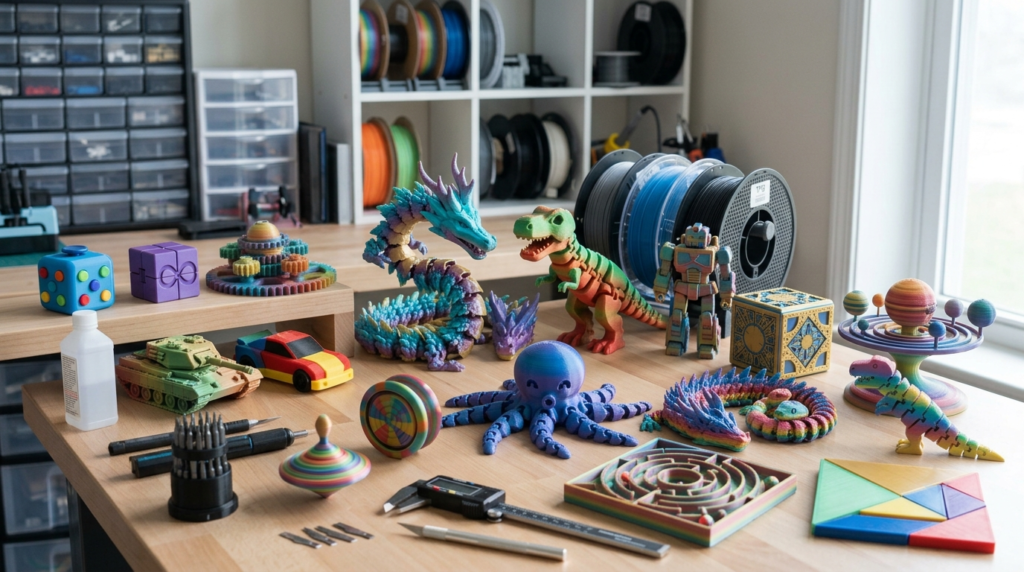
If you’re looking to branch out beyond a single fidget cube, there’s a huge range of 3D printable toys worth trying, spanning fidget toys, articulated animals, vehicles, puzzles, mechanical gadgets, and a few genuinely educational builds along the way. This list mixes easy, beginner-friendly prints with a few that reward some printer calibration and patience, so there’s something here whether you’re printing your first toy to 3D print or your fiftieth.
1. Print-in-Place Fidget Chain
A simple linked chain that prints as one connected object with no assembly. Generous tolerances make this one of the most forgiving 3D printed toys for a first attempt, and PLA handles it well. It’s often the first recommendation for anyone new to print-in-place mechanics, since a failed segment is easy to spot and doesn’t ruin the rest of the chain.
2. Three-Piece Friction Spinner
A basic spinner with a printed pivot instead of an inserted bearing. Easy to print, easy to fail gracefully, and a good way to learn how printed plastic-on-plastic rotation feels. Because there’s no hardware to source, it’s a same-day print that’s ideal for testing a new printer’s tolerances before moving to something more ambitious.
3. Bearing-Based Fidget Spinner
The same idea as above, but built around an actual inserted bearing for a smoother spin. Slightly more involved since it needs a sourced part, but the payoff in feel is noticeable. This is a natural upgrade once the friction-spinner version starts to feel rough or slows down too quickly.
4. Print-in-Place Gyroscope Toy
A spinning gyroscope housed inside a printed cage, with the two parts printed together. The tolerance between the spinner and cage is the whole challenge here, so it’s worth printing a small tolerance test first if the design offers one. Getting it right rewards you with a toy that keeps spinning noticeably longer than a plain friction spinner.
5. Articulated Dragon
One of the more elaborate print-in-place designs, with dozens of segments and joints printing in a single job. Mechanically satisfying but a real test of tolerance calibration on longer prints, since a single fused joint partway through can compromise the whole model. Best attempted once a printer has already proven itself on smaller articulated toys.
6. Flexible Articulated Dinosaur (Flexi-Style)
A segmented dinosaur that bends and flexes along its spine once printed. A popular next step after simpler chains, usually still manageable in PLA, and the flexing motion tends to be more forgiving on tolerance than fully separate joints. It also makes a good demonstration piece since the movement is immediately obvious to anyone handling it.
7. Print-in-Place Turtle with Wiggly Legs
A rounded, low-detail animal design that tends to be more forgiving on tolerance than sharper-edged designs, making it a solid beginner articulated toy. The simplified shell and leg geometry also print relatively quickly compared to more detailed animal models.
8. Multi-Jointed Snake
A long chain of interlocking segments that curls and coils. Simple geometry per segment makes this an accessible entry point into articulated 3D printed toys, and the repetitive segment shape means any tolerance adjustment you make applies consistently across the whole length.
9. Print-in-Place Octopus
Eight independently articulated legs attached to a single printed body. More joints than a chain means more chances for fusing, so it rewards a printer that’s already dialed in. Orientation matters more here too, since each leg needs even cooling to avoid drooping or sagging mid-print.
10. Print-in-Place Elephant
A rounder, chunkier articulated animal design where thicker joints tend to be a bit more durable than thinner ones, at some cost to how freely they move. It’s a reasonable choice if previous articulated prints have snapped at thin connecting points, since the bulkier geometry is naturally more forgiving.
11. Fidget Cube with Multiple Mechanisms
A small block combining a few simple mechanisms, like a rocker switch or roller, on different faces. Each face can effectively be treated as its own smaller print-and-test project, which makes troubleshooting easier than debugging a single complex mechanism all at once.
12. Infinity Cube
A folding cube made of hinged smaller cubes that flip open and closed in a loop. Visually interesting but demanding on hinge tolerance and orientation, since even a slightly tight hinge can stop the whole loop from folding smoothly.
13. Interlocking Gear Fidget Toy
A small cluster of gears that mesh and spin together. Consistent tooth dimensions matter a lot here, so a well-calibrated printer helps avoid binding, and a slightly finer layer height can noticeably improve how cleanly the teeth engage.
14. Clicker Fidget Toy
A small mechanism built around a single satisfying click or snap action. A good middle-ground project between a static print and a full print-in-place design, since it usually involves only one or two moving parts to get right.
15. Slider Fidget Toy
A toy with a part designed to move along a track without ever fully separating. Clearance between the slider and track is the key setting to get right, and a touch more clearance than the file suggests is often safer than printing it too tight.
16. Chainmail-Style Fidget Toy
A flexible sheet made of many small interlocking printed rings. Time-consuming due to the number of individual links, but genuinely tactile once finished, and it’s one of the more unusual textures you can get out of a standard FDM printer without switching to TPU.
17. Print-in-Place Tank with Rolling Treads
A small vehicle where the tracks and wheels print already connected and moving. A nice crossover between the articulated-toy and vehicle categories, and a good demonstration of how print-in-place mechanics extend beyond animals and chains.
18. Simple Rolling Car with Independent Wheels
A basic car body with wheels that print separately from axles designed for a snug, spinning fit. A gentle introduction to 3D printed toy vehicles for beginners, since the wheels and body can be tuned and reprinted independently if the fit isn’t right the first time.
19. Rubber-Band Powered Car
A printed chassis and wheels paired with a rubber band drivetrain instead of any electronics. A fun mechanical toy that teaches basic tension and gearing concepts without added complexity, and it’s a good option for anyone who wants a toy that actually moves under its own power without motors or batteries.
20. Print-in-Place Jointed Robot Figure
A small humanoid or blocky robot with poseable, articulated limbs printed in place. A good project for combining several smaller joints into one connected toy, and posing it afterward gives it a bit more play value than a purely fidget-focused design.
21. Simple Puzzle Box
A small box with a sliding or twisting mechanism that has to be figured out to open it. Tolerances matter for the moving panel, but the geometry itself is usually straightforward, making this a good first mechanical puzzle to attempt.
22. Interlocking Burr Puzzle
A classic wooden-puzzle style design translated into a 3D printable toy, made of several notched pieces that slot together in a specific order. No moving joints required, just precise-fitting static parts, which shifts the challenge from tolerance calibration to careful dimensional accuracy.
23. Planetary Gear Puzzle
A satisfying mechanical puzzle built around interlocking gears that must be assembled or manipulated correctly. A good showcase for how gear-based 3D printed toys behave when printed accurately, and it doubles as a neat demonstration of how planetary gear systems actually work.
24. Educational Solar System Model
A set of small planets on a rotating or fixed frame, useful as both a desk toy and a basic educational aid. Multi-color filament or simple painting adds a lot here, and relative planet sizing can turn it into a genuinely useful teaching tool rather than just a display piece.
25. Educational Gear Train Demonstrator
A base plate with a visible train of meshing gears, useful for showing how gear ratios and rotation direction work. A genuinely educational toy alongside being fun to spin, and it’s a practical way to explain mechanical concepts to kids without relying on diagrams alone.
26. Alphabet or Shape-Sorting Blocks
Simple geometric blocks designed for young children to sort or stack. A good example of a 3D printed toy where finish quality and rounded edges matter more than mechanical complexity, so extra attention to smoothing and sanding pays off here.
27. Desk-Toy Balancing Figure
A weighted figure designed to balance on a fingertip or edge using a low center of gravity. Almost no moving parts, but a fun demonstration piece for a desk, and it’s a good low-risk print for practicing overhangs and weight distribution in a design.
28. Marble Run or Maze Toy
A small maze or ramp system where a marble navigates through printed channels. Print orientation matters to keep the channels clean and the marble moving smoothly, and a slightly larger channel tolerance usually beats a tight one that risks the marble sticking.
29. Spinning Top
About as simple as 3D printed toys get: a symmetrical body and a point, sometimes paired with a small metal insert for better balance. A genuinely easy first print for anyone new to a printer, and it’s a good way to test how well-balanced a print comes out without needing any moving joints at all.
30. Yo-Yo
A two-piece design connected by string rather than a printed joint, which sidesteps the tolerance challenges of print-in-place toys entirely while still being a satisfying, functional toy. Weight distribution between the two halves matters more than print tolerance for how well it actually performs.
31. Tangram-Style Puzzle Set
A set of flat geometric pieces that combine into different shapes and pictures. Quick to print, easy on filament, and a solid educational toy for practicing spatial reasoning, and the flat pieces are simple enough to print several sets at once for classroom or gift use.
Taken together, this list is a reasonable cross-section of what’s out there if you’re searching for 3D printable toys beyond the basics — some genuinely easy weekend prints, a few that lean into mechanical or educational value, and a handful of articulated and fidget designs that reward a printer that’s already been calibrated. As with any of these, checking a design’s tolerance notes and license terms before printing is worth the extra minute, whether the goal is a quick desk toy or something to give away.
You Might Also Like
- 3D Printing Innovations: What’s Actually Changing and Why It Matters
- How to Calibrate a 3D Printer: A Practical, No-Nonsense Guide
- Metal 3D Printer: A Practical Guide to How They Work, What They Cost, and Whether You Actually Need One
- Things to 3D Print: A Practical Guide to Useful, Fun, and Worthwhile Projects
- Creality Ender 3 V3: A Practical Look at Features, Specs, and Whether It’s Right for You
- How to Become a Drone Pilot — What Actually Happened When I Tried It
- Agricultural Drone — What Actually Happened My First Season – 2026
Frequently Asked Questions
What are the easiest 3D printed fidget toys for beginners? Simple spinners without inserted bearings, and print-in-place chains or small segmented toys with generous tolerances, tend to be the most forgiving starting points.
What filament is best for 3D printed fidget toys? PLA is the most common and forgiving choice, especially for print-in-place designs. PETG offers more durability for parts handled roughly, and TPU suits flexible, squeezable designs, though it’s less beginner-friendly to print.
Can you 3D print fidget toys without supports? Many print-in-place and articulated designs are built to print support-free through careful orientation, but this depends on the individual model — some genuinely need supports for overhanging features.
What are print-in-place fidget toys? Designs where multiple moving parts print as one connected object, with small deliberate gaps between segments that keep them separate while touching, letting the finished object move right off the build plate without assembly.
Why do articulated 3D prints get stuck? Usually because the tolerance between moving parts was too tight for that specific printer, often combined with slight over-extrusion or first-layer squish that closes the gap meant to allow movement.
Can you sell 3D printed fidget toys? Sometimes, but it depends on the design’s license, whether it involves trademarked or copyrighted elements, and whether the creator’s terms permit commercial use — this needs to be checked, not assumed.
Are 3D printed fidget toys safe for children? It depends on the object, the child’s age, and the material. Small parts, pinch points, and unfinished sharp edges are real considerations, and printed plastics generally shouldn’t be assumed safe for a child who might mouth objects unless the material and manufacturing process are specifically appropriate for that intended use.
Final Thoughts
There’s something genuinely appealing about fidget toys as a category of 3D printing, beyond just being fun to hold. They’re small enough to experiment with cheaply, mechanical enough to teach real lessons about tolerances and calibration, and customizable enough that a beginner can turn someone else’s idea into something that feels a little more personal.
Getting a print-in-place design to work perfectly on the first try isn’t guaranteed, and that’s worth expecting going in. A fused joint or a snapped connector isn’t really a failure so much as a normal part of learning how a specific printer behaves. Once that calibration clicks, there’s a particular kind of satisfaction in watching a printer finish a job and realizing the object it just made can actually move. That’s a small thing, honestly, but it’s the kind of small thing that explains a fair amount of why people get hooked on 3D printing in the first place.