

 By
By It started with a photo.
One of those deep-dive Reddit posts where someone had built this absolutely clean silver and white gaming setup, and I remember just staring at my screen like an idiot for ten minutes straight. My own PC at the time was this black tower with mismatched fans — one of which was slightly tilted because I’d stripped a screw during a college move. Not pretty.
Something about seeing that silver build just broke something in me. I needed a silver gaming PC. I needed it immediately and irrationally.
This was eight months ago. I’d been gaming on a mid-range setup for a couple of years, nothing special, but it worked. The problem wasn’t performance, it was the aesthetic itch I suddenly couldn’t scratch. So I started researching a silver gaming PC build obsessively — browser tabs open at midnight, falling asleep to YouTube build videos, the whole embarrassing spiral.
I want to be upfront about something: I’m not a professional builder. I’ve done three builds total before this one. I made real mistakes here and I’m going to tell you about them, because that’s more useful than another review that makes everything sound perfect.
Let me just walk you through what actually happened.
Finding Matching Silver Components Was Way Harder Than I Expected
First big thing I learned: silver PC components aren’t exactly everywhere.
You’d think it’s a simple aesthetic choice — just pick silver stuff instead of black, done. But the silver gaming PC components market is actually pretty specific. Not every component comes in silver. Not every silver option is good. And matching shades of silver across different brands? That was a whole thing I was completely unprepared for.
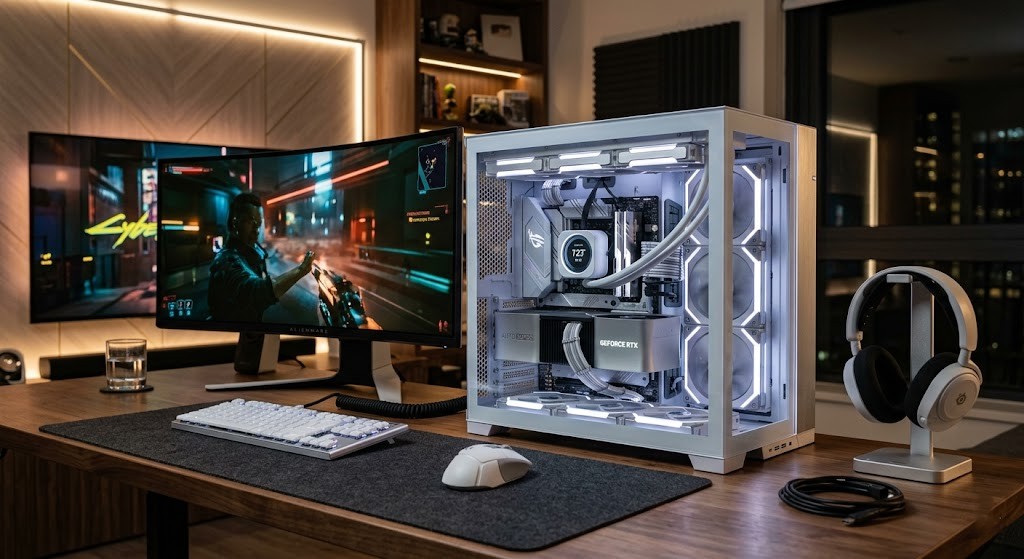
I started with the case. Went with the Lian Li O11 Dynamic EVO in white/silver — genuinely great choice, no regrets there. It’s got a brushed aluminum panel on the side, roomy inside, and it has this quality to it that makes you want to just leave it on your desk like a piece of furniture.
But here’s where it got annoying: the case came with silver accents that were a slightly cooler, bluer tone of silver. Then when I ordered my Cooler Master silver tower cooler and my ASUS ROG Strix motherboard in the silver/white colorway, those silver tones were slightly warmer. You only really notice it when everything’s inside and the light hits it a certain way — but I noticed, and it mildly drove me crazy for about three weeks.
Nobody really talks about silver tone matching when they discuss builds like this. Everyone just says “silver and white build” and posts beautiful photos, but those photos are always taken at a specific angle with specific lighting. In real life, under desk lamps and monitor glow, you can see the inconsistencies.
Mistake one. I bought my RAM before confirming it came in a silver heatspreader version. I’d been looking at the G.Skill Trident Z5 series, which does come in silver, but I ordered too fast and ended up with the white and black version. Had to reorder, pay return shipping, wait another week. Completely self-inflicted.
Make a spreadsheet before you start buying. Map out every single component and verify the color before you hit checkout. Obvious in hindsight. Not obvious at midnight when you’re excited.
The RAM situation ended up fine though. The silver Trident Z5 sticks look genuinely incredible once installed — the machined aluminum texture on the heatspreader catches light in a way cheaper alternatives just don’t. I’d compared them with the Kingston Fury Beast silver version earlier, and the G.Skill ones looked more premium up close. Kingston ones are cheaper and still solid, but if the look matters to you, the difference is real.
The GPU Problem Nobody Warns You About
Silver GPUs are actually kind of rare. Most high-end cards from Nvidia or AMD come in black by default, and the silver or white variants are usually from specific AIB partners — harder to find and almost always more expensive.
I’d originally wanted the ASUS TUF Gaming RTX 5070 Super in white, but couldn’t find it in stock at a reasonable price. Ended up with the Gigabyte Aorus RTX 4070 Super in white — it has silver and gray tones that worked well enough, though it’s more white than silver strictly speaking. I was a little disappointed honestly. This was probably my most significant compromise in the whole silver gaming PC build.
Mistake two happened during installation. I was so focused on cable routing and keeping everything looking clean that I installed the GPU before plugging in the CPU power connectors. Then I had to partially disassemble to reach back in there. Stupid sequence-of-operations mistake. I’d done builds before and still got impatient.
The Lian Li case is generous with space, but once that GPU is in there, access to the top of the board is genuinely tight. Have a plan for install order before you start. Write it down if you have to.
Best Silver PC Components for This Build
Disclosure: This article may contain affiliate links. If you buy through these links, I may earn a small commission at no extra cost to you.
| Component | Recommended Product | Why I Recommend It | CTA |
|---|---|---|---|
| Silver PC Case | Lian Li O11 Dynamic EVO White | Premium aluminum design and amazing airflow | Check Price |
| Silver Motherboard | ASUS ROG Strix Z790-A Gaming WiFi | Clean white/silver aesthetic with strong VRMs | View on Amazon |
| Silver RAM | G.Skill Trident Z5 RGB Silver DDR5 | Premium aluminum heatspreaders and great RGB | Buy Now |
| Silver GPU | Gigabyte Aorus RTX 5070 Super White | Clean silver/white shroud with strong gaming performance | See Details |
| CPU Cooler | Cooler Master Hyper 622 Halo White | Excellent cooling with silver accents | Check Availability |
| White PSU Cables | CableMod Pro ModMesh White Kit | Makes silver builds look dramatically cleaner | View Deal |
| Fans | Lian Li UNI FAN SL-INF White | Better airflow and premium RGB lighting | Learn More |
Cable Management in a Silver Gaming PC Is a Different Beast
This took me forever and I wasn’t ready for it.
Cable management in a silver gaming PC is so much more unforgiving than in a black build — and I genuinely didn’t appreciate that until I was deep into it. With black cases and black cables, you get visual mercy. Cables sort of disappear into the background.
With silver and white, everything shows. Every slightly off-angle cable, every zip tie that’s a millimeter too visible. I had to buy custom white PSU cables separately — went with CableMod white braided cables — and even then spent probably four hours routing and rerouting. At about hour three I almost gave up and just shoved everything in. I pushed through instead, and I’m glad I did because the end result looks the way I imagined it would.
Mistake three, and maybe the dumbest: I went cheap on cooling fans. Bought some generic silver ring fans because they were cheaper than the Lian Li Uni Fans in white/silver. The airflow wasn’t great, but worse than that, those fans just looked cheap. Thinner blades, dimmer light ring, the overall vibe was off in a way that bugged me every time I looked at the build.
I ended up replacing them anyway. Paid twice. Just buy the fans you actually want from the beginning. The Lian Li fans are pricier but they integrate cleanly into the aesthetic and the airflow genuinely is better.
The whole build process was maybe twelve hours spread across two weekends. A lot of it was slow, careful work that I didn’t expect to enjoy but kind of did. There’s something almost meditative about routing cables properly when you’re building a silver gaming PC — it’s not fast, but it’s satisfying in a specific way that I hadn’t experienced in my previous builds.
Is a Silver Gaming PC Actually Worth the Extra Money?
Here’s where I want to be genuinely honest with you.
The gaming performance is the same as any comparable spec build. If you put the same CPU, GPU, and RAM in a boring black tower, you get the same frames. The silver components don’t make your games run better.
But.
I didn’t expect this, but the daily experience is actually different in a psychological way. I’m at my desk more. I genuinely enjoy sitting down at this setup in a way I didn’t before. There’s something about having a build you obsessed over aesthetically that makes the whole experience feel more intentional. My partner thinks I’ve lost my mind, by the way. She’s not entirely wrong.
Performance numbers, for context: running an Intel Core i7-14700K with the RTX 4070 Super, 32GB of G.Skill Trident Z5 silver DDR5, and the ASUS ROG Strix Z790-A. Getting solid 1440p gaming, mostly above 100fps on demanding titles. The CPU cooler keeps temps reasonable — idle around 35-38C, gaming 65-70C max.
The real cost of a silver gaming PC is financial. Silver and white components are almost universally priced higher than their black equivalents. The white ASUS ROG motherboard cost me about $40-60 more than the same board in black. The silver RAM was slightly more expensive. White cases generally command a slight markup. I probably spent an extra $150-200 across the whole build just for the aesthetic.
Was it worth it? Honestly yes — but only because aesthetics genuinely matter to me and I use this setup every single day. If you’re building purely for performance or you’re on a tight budget, the silver gaming PC route is going to cost you more for nothing functional. That’s the honest answer and I’m not going to dress it up.
There’s also a real comparison worth making to a standard black build. My old black tower with a be quiet! Pure Rock cooler and standard Corsair Vengeance RAM was a great machine. Zero aesthetic drama. Everything available everywhere, colors matched automatically because everything was black, no stressing about tone matching or fan blade visibility. There’s a real argument for just going black. Easier, cheaper, equally effective. The silver gaming PC path is a choice you make with your eyes open.
Questions From People Who’ve Seen My Build Photos
I posted some build progress shots in a few Discord servers and got a lot of the same questions. Here’s how I’d answer them honestly:
Is it hard to find silver components for a full build? It takes more effort than a black build, definitely. Check color variants specifically on Newegg, Amazon, or manufacturer sites. Some components like GPUs have very limited silver options — I spent two weeks just on the GPU search alone. Plan ahead and be ready to compromise on one or two parts, or wait for restocks. Patience here saves money and frustration later.
Do silver components show dust more? Yes. God, yes. Silver and white show dust dramatically more than black. I’m cleaning my case every two weeks now, sometimes more. If you hate cleaning or your room gets dusty, know that going in. It’s not a dealbreaker but it’s a genuine maintenance commitment that black builds just don’t have.
Are silver components actually worse quality? In my experience, same quality or sometimes better — silver and white colorways tend to be higher-tier SKUs from most manufacturers. The components I chose weren’t compromising on specs, just different shrouds and aesthetic finishes. The one exception might be fans — verify airflow specs carefully because some aesthetic fans sacrifice actual performance for looks, which defeats the purpose entirely.
Would you build silver again? Yeah, probably. I’d plan better, buy the right fans upfront, and make that color-matching spreadsheet before ordering anything. I’d also give myself more time on the GPU search instead of settling on my second choice. But overall the silver gaming PC choice was right for me and I don’t have genuine regrets about any of it.
Eight Months Later
Eight months is enough time to know whether a silver gaming PC was the right call or just an expensive phase. For me it was the right call — but I want to be specific about why, because “I love it” isn’t useful to someone still deciding.
I’m sitting at this desk right now, actually.
The build still looks good. A bit dusty around the front intake — I keep meaning to clean it this weekend and keep not doing it — but good. The silver tones have grown on me, even the slight mismatch between the case and the motherboard heatsinks that drove me crazy at first. I barely notice it now.
There are moments where I’ll come back to my desk at night and the ambient RGB from the fans is hitting the silver components in just the right way and I think — yeah, okay, worth it. Then there are moments where I’m pulling out the case to wipe down the panels and I think, this is annoying, black would have been fine.
That’s the honest truth of a silver gaming PC build. More work, more money, more planning, occasionally more maintenance. But if you genuinely care about your setup looking a specific way — if aesthetics of your workspace actually matter to you day to day — then the extra effort returns something real. Not performance. Just satisfaction.
I’ve recommended this silver gaming PC route to two friends since finishing mine. One went for it, one decided black was fine. Both made the right call for who they actually are.
If you’re the kind of person who notices their environment — who feels subtly better or worse depending on what their workspace looks like — a silver gaming PC will return that investment. If you’re not that person, save the money and spend it on a better GPU instead.
You Might Also Like
- Gaming PC Under $600: Honest 6-Month Review & Build Guide
- How to Optimize Gaming PC for Ray Tracing Without Killing FPS (2026)
- White Gaming PC Review: The Beautiful Mistake I Don’t Regret (2026)
- Best Power Supply for Gaming PC: The Expensive Mistake That Saved My Build (2026)
- I Bought a Refurbished Gaming PC 6 Months Ago — Honest Take From Someone Who Almost Regretted It
- Savant Home Automation Review: My Shocking Real Experience After 2 Months