

 By
By Hello, I’m Jigar the creator of JigTechHub. Although I usually write about technology and digital tools, gardening is a personal passion of mine. Over time, through small efforts at home and my own experience, I realized that growing your own beautiful plants is not as difficult as we think
Many people see bonsai as just a decorative plant in the beginning I used to think the same, but once you start caring for one, you realize it becomes much more than that. But as days pass, you slowly realize how much patience and quiet attention it asks from you.
Growing something that looks like a full-grown tree inside such a shallow pot takes more effort than most people expect. We often focus on watering and pruning, but the soil inside the pot plays an equally important role.
It’s quite common to bring home a vibrant, healthy-looking bonsai with excitement, but within a few months the leaves begin turning yellow, growth slows down, or the tree starts looking weak. And surprisingly, the issue often doesn’t start with watering or sunlight it begins silently in the soil below.
Soil is not just there to support the tree physically it quietly controls how healthy the bonsai will be in the long run, strengthening the roots and keeping it alive for years. To truly understand this, we need to look a little deeper into what makes bonsai soil different and why it plays such a quiet but powerful role.
What is bonsai soil and how is it different from regular soil?
At first, it feels natural to use regular garden soil. But bonsai trees don’t behave like normal garden plants. Garden soil is usually dense and sticky, especially when packed inside a small container. Inside a small bonsai pot, this type of soil becomes compact over time, blocking proper drainage and restricting airflow around the roots. When bonsai is grown in a small pot, its roots have limited space. If the soil is heavy, the roots will not get oxygen and may rot.
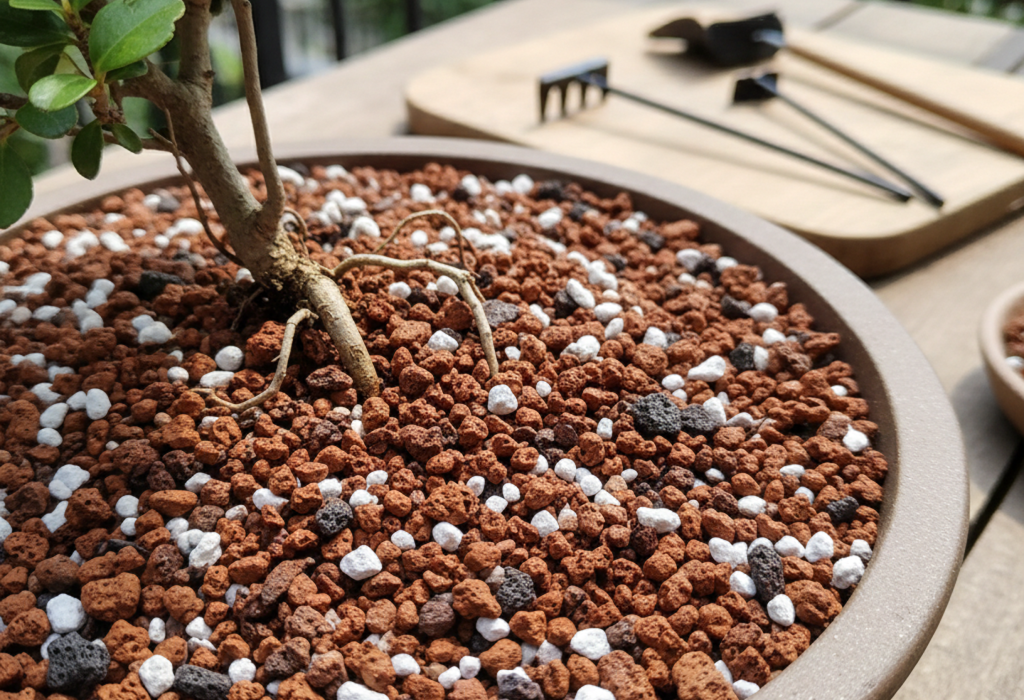
Bonsai soil is prepared differently. It’s made using materials that allow excess water to drain quickly while still retaining enough moisture for the roots to survive and grow. This type of soil has small particles and spaces, which makes it easy to circulate air. In simple terms, bonsai soil is designed to balance drainage, airflow and nutrition.
Importance of Bonsai Soil in Root Health
One thing I’ve learned over time is this when the roots are healthy, the entire tree reflects that health. Although roots remain hidden beneath the soil surface, they are the true foundation and support system of the entire bonsai tree. If the soil holds water for too long, the chances of root rot increase. On the other hand, if it dries out too quickly, the roots won’t receive the moisture they need.
A well-prepared bonsai soil holds just enough moisture not too much, not too little. for healthy root development while ensuring that surplus water escapes easily through the drainage holes. It also provides the roots with oxygen, which is essential for growth. In this way, the right soil strengthens the bonsai from the inside out.
Simple Soil Guide for Beginners
If you’re just starting your bonsai journey, it’s easy to feel overwhelmed. But honestly, you don’t need anything complicated at first. There is no need to start with a complicated soil formula. A simple and balanced mixture is more than enough in the early stages. A simple mix of 50% drainage material (such as Akadama or similar grit), 25% pumice or similar material, and 25% lava rock or similar can be used.
The main thing to remember at first is to avoid standing water in the pot. As you gain experience, you can adjust the mix to suit your bonsai’s response. You’ll slowly understand your tree better sometimes through small mistakes that quietly teach you valuable lessons.
Main Ingredients of Bonsai Soil
1. Akadama
Akadama, a traditional Japanese clay soil used specifically for bonsai, is highly valued because of its unique balance between water retention and drainage. It is baked clay and its particles are round and grainy. Akadama absorbs water, but at the same time allows excess water to escape. So, it maintains a great balance between moisture and drainage.
Over the years, you’ll notice Akadama slowly breaking down, which naturally signals that it is time for repotting and soil renewal. Akadama is a very popular choice for experienced bonsai enthusiasts because it helps keep the roots strong and healthy.
2. Pumice
At first glance, pumice looks like nothing special just a light stone, but it plays an important role in improving the structure of bonsai soil by keeping it loose and airy. Its porous structure means it absorbs some water and lets the rest out. Pumice loosens the soil and helps increase aeration.
In hot climates, where soil dries out quickly, pumice is especially useful because it retains some moisture. Plus, it provides a favourable medium for roots to spread.
3. Lava Rock
Many growers include lava rock in their soil mixes because it doesn’t break down quickly and helps improve long-term stability. Its specialty is that it retains its structure for a long time. Adding lava rock to the soil improves drainage and prevents the soil from compacting.
It provides strong support to the roots and keeps the soil structure in the pot stable for a long time. Lava rock is especially useful for varieties that require good drainage.
4. Organic Potting Mix
Organic components in bonsai soil may include compost, leaf mold, or peat moss, which contribute natural nutrients to support plant growth and overall health. For beginners, adding a little organic mix can be beneficial because it retains water a little longer.
But if the organic component is too high, the soil can become heavy and water retention can become a problem. That’s why maintaining the right balance becomes so important.
Different soil mixtures for different trees
A mistake many beginners make and I’ve seen it often is using the exact same soil mix for every bonsai. but different bonsai types require slightly different moisture and drainage conditions. For example, Juniper bonsai likes good drainage, so it is kept with a high proportion of akadama, pumice and lava rock. This type of mixture drains water quickly and prevents the roots from rotting.
On the other hand, Ficus bonsai can tolerate a little more moisture. Therefore, adding a little organic mixture to it ensures good growth. Flowering bonsai requires more nutrients, so a balanced amount of organic matter can be increased in it.
Tropical varieties like moisture, while deciduous varieties are more suitable for dryness in winter. Therefore, always choose the soil according to the type of tree.
Pot Type and Soil Relationship
Even the pot you choose changes how the soil behaves in terms of moisture retention and airflow, though many people ignore this factor. It is very important to understand the balance between soil and pot. Clay pots allow air to pass through and water dries quickly. While plastic pots retain moisture for a longer period.
If you keep bonsai in a clay pot, a slightly more moisture-retaining mixture will work. But if it is a plastic pot, it is advisable to choose a soil with more drainage. This small understanding alone can prevent many frustrating problems later.
Ready-made mixtures and homemade mixtures
Today, ready-made bonsai soil mixtures are easily available in gardening stores and online marketplaces. They are convenient for beginners because they contain ingredients in balanced proportions. Many people choose ready-made mixtures to save time and effort. However, sometimes its quality can vary from brand to brand and the cost can be a bit high.
If you have some experience, you can make your own mixture at home. This way, you can adjust the quantity according to the needs of your bonsai. Also, the cost is also kept under control. But it is very important to maintain the right quantity and quality.
Repotting and soil change time
No soil stays perfect forever that’s just the nature of it. Over time, soil particles begin to break down, reducing drainage capacity and affecting root health. In most cases, repotting every 1 to 3 years works well, though it also depends on the tree’s growth. If water remains in the pot for a long time, or roots start to appear outside, then it is time to change the soil.
Spring is the best time to repot because at this time the tree is ready for new growth. During repotting, the old soil can be gently removed, excess roots can be cut off and new fresh soil can be filled in. This refreshes the root system and supports healthy new growth.
Why is soil sifting necessary?
Some growers skip sifting because it feels unnecessary at first and use the soil mixture directly, but sifting is actually an essential step in proper bonsai preparation. Large particles and very fine dust should be separated. Fine dust can accumulate in the pot and block drainage.
When particles of the same size are used, the soil structure remains more stable. Water flows evenly and the roots get proper air. This process requires some effort, but is very beneficial in the long run.
A guide to healthy bonsai in the long run
Selecting the right soil is only the first step; ongoing care matters just as much. The condition of the soil should be checked regularly to ensure that it is not becoming too hard. When watering, make sure that excess water drains out of the bottom hole. It is also important to consider the quality of the soil when applying fertilizer.
Bonsai has never been about quick results. It’s about watching, adjusting, and caring regularly over a long period of time. It asks for patience, observation, and steady care nothing rushed. Proper care with the right soil can keep a bonsai beautiful and alive for years.
Fertilizer and soil coordination
Since bonsai soil is primarily designed for drainage and structure, it contains limited nutrients. For this reason, regular and balanced fertilization becomes essential. But here it should be kept in mind that the amount and timing of fertilizer are correct. Giving too much fertilizer can burn the roots.
Fertilizer should be given keeping in mind the type of soil. If the soil is highly drained, then the fertilizer can come out quickly. In such a situation, it is appropriate to give fertilizer little by little but regularly. In this way, it is necessary to maintain a balance between soil and fertilizer.
The Relationship Between Bonsai and Patience
Bonsai isn’t just technical work; over time, it becomes something emotional and deeply personal. Choosing the right soil is a start, but it also requires constant attention and sensitive care. Every bonsai has a different temperament no one mix is perfect for everyone.
When you observe your bonsai regularly, touch its soil and understand its condition, you gradually learn what it wants. This relationship is what makes the art of bonsai special.
Also read this :-
- Complete Guide to Growing Japanese Acer Bonsai (Care, Tips & Styles)
- What Growing a Bonsai Taught Me About Patience, Art, and Nature
- Gardening Gloves: Types, Uses, and How to Choose the Best Pair
- Backyard Farming: A Simple Guide to Growing Healthy Food at Home
- The Key to a Thriving Garden: 21 Essential Gardening Tools
Conclusion
The soil you choose today quietly shapes how your bonsai will grow and look years down the line. It forms the foundation of your long-term relationship with the tree and its health. Good drainage, adequate air circulation and balanced nutrition keep these three things in mind and your bonsai will stay healthy for a long time.
If you are a beginner, start with a simple and balanced mixture. As you gain experience, you will find the soil that is most suitable for your bonsai. Remember, Bonsai is a long-term commitment, and the right soil supports that journey at every stage.
FAQ
1. Can normal garden soil be used for bonsai?
Ans. Normal Garden soil is not suitable for bonsai. It is heavy and sticky, due to which drainage does not occur properly in small pots. If water remains for a long time, the roots can rot. A special mixed soil with light and good drainage should always be used for bonsai.
2️. How often should bonsai soil be changed?
Ans. It is generally considered appropriate to change bonsai soil every 1 to 3 years. If water remains in the pot for a long time, or the roots start to appear outside, repotting may be required. Spring is considered the best time for repotting.
3️. Why is drainage important in bonsai soil?
Ans. If drainage is not proper, water accumulates around the roots, which causes the roots to rot. Good drainage allows air to pass through the soil and allows excess water to drain out. This is essential for keeping the roots healthy.
4️. What is the best soil mix for bonsai?
Ans. A simple and balanced mix usually includes 50% drainage material (such as akadama), 25% pumice, and 25% lava rock. However, the soil mix can vary slightly depending on the type of bonsai and the climate.
5️. What is akadama and why is it useful?
Ans. Akadama is a special type of soil used in Japan, which creates a good balance between water retention and drainage. It also provides moisture to the roots and drains excess water. That is why it is very popular among bonsai growers.
6️. Is ready-made bonsai soil good?
Ans. Yes, ready-made bonsai soil is suitable for beginners because it contains the necessary ingredients mixed in the right proportions. But the ratio can vary by brand, so it’s best to buy from a reliable source.
7️. What happens if bonsai soil holds too much water?
Ans. If the soil stays wet for too long, the roots don’t get oxygen and can rot. The effects are yellowing of the leaves, slow growth, and the entire plant becomes weak.
8️. Why is bonsai soil sifting necessary?
Ans. Sifting the soil helps to separate large particles and very small dust. Small dust can accumulate in the pot and prevent drainage. Using particles of the same size keeps the soil structure more stable and provides proper air to the roots.