

 By
By Welcome to JigTechHub — a space built for curiosity, learning, and practical knowledge.
Here, I explore a mix of technology, tools, AI, gadgets, business, finance, and educational topics, and share what I learn in a simple and honest way.
Along with technology, I have a deep interest in gardening and sustainable living. I enjoy experimenting with new ideas—whether it’s a tech tool, an AI concept, or growing plants in a small balcony—and then sharing those experiences so others can learn from them too.
JigTechHub is not about being an expert in everything; it’s about learning new things, testing them in real life, and teaching them in a way that anyone can understand. If you enjoy discovering useful ideas and growing step by step—this place is for you.
Why Balcony Gardening Is Perfect for City Life (My Personal Experience)
If you live in a city, you probably know this feeling—noise, pollution, and hardly any space to breathe. That’s exactly where my interest in balcony gardening began.. Living among traffic noise and concrete buildings slowly pulls us away from nature without us even realizing it.
Not so long ago, many homes had open land, courtyards, or small gardens where families would grow plants and enjoy nature together. But today, most people live in flats and apartments, where it has become difficult to find enough space for a garden. In such a situation, balcony gardening has become an excellent and easy way to connect with nature.
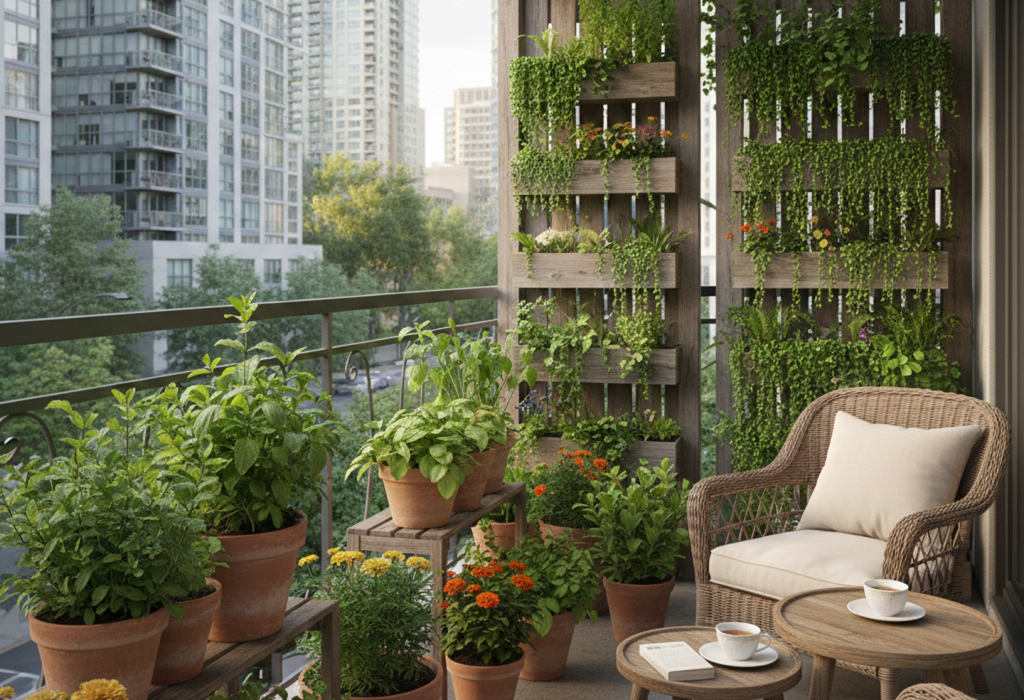
For me, balcony gardening became a way to turn an unused corner into a calm, green space inside my own home. With the help of pots, hanging planters and vertical stands, people are now finding creative ways to grow plants even in very small balconies. It not only made my home look better but also helped me feel calmer and more relaxed.
What is Balcony Gardening?
To put it simply, balcony gardening means growing plants in whatever small balcony space you have. You can grow whatever you like—flowers, vegetables, or even herbs. On my balcony, I started with flowers and herbs and slowly experimented with vegetables. on the balconies of their homes. These plants are usually planted in clay or plastic pots, hanging pots, or vertical garden stands. Although some balconies have limited space, with proper planning, many plants can be easily grown.
What I really like about balcony gardening is that you don’t need expensive tools or setup to get started. With a few pots, good soil, regular watering, and a little care, anyone can start balcony gardening. This is why balcony gardening has become a popular option for people living in cities.
Benefits of Balcony Gardening
At first, balcony gardening may look simple, but it slowly changes your daily routine in a good way.
- One of the most noticeable benefits of balcony gardening is the improvement in air quality. Plants absorb carbon dioxide and release oxygen, due to which the surrounding air becomes cleaner. Since pollution and dust are high in cities, plants grown on balconies help provide clean and fresh air.
- Apart from physical benefits, balcony gardening also brings mental peace. Taking care of plants, watering them and watching them grow every day calms the mind. Personally, taking care of my plants after a long day helps me disconnect from stress. Watching a new leaf grow feels surprisingly satisfying. For me, even five minutes with my plants feels like a mental reset.
- Another important benefit of balcony gardening is its positive impact on health. Home-grown vegetables and herbs feel fresher and safer, and there’s a special satisfaction in knowing exactly how they were nurtured. They often taste better and somehow feel more nourishing than store-bought vegetables. Plants like basil, mint and coriander help in boosting the immune system.
- A balcony full of plants instantly makes the home feel more lively and welcoming. A balcony full of greenery makes the atmosphere of the house lively and attractive. It also becomes a beautiful sight for the guests.
Plants suitable for balconies
While picking plants for your balcony, it helps to think about sunlight, space, and the local weather—these little details make a big difference.
Flowering plants:
Flowering plants like roses, Jasmine, galgota, chandni, petunias and Royal Poinciana are very suitable for balconies. These plants give beautiful flowers even with low maintenance and make the balcony attractive.
Vegetables:
Vegetables like tomatoes, chillies, spinach, fenugreek, Eggplant, Lady’s Fingers and onion can be easily grown in pots. Fresh chillies or mint picked from your own balcony feel more satisfying than store-bought ones.
Herbs and medicinal plants:
Plants like basil, mint, coriander, aloe vera, curry leaves and parsley are excellent for balconies. Apart from being beneficial for health, these plants are also useful for household use.
How to start balcony gardening
Before starting balcony gardening, I also spent some time learning basic gardening concepts and tools. Even though balcony gardening doesn’t require many tools, understanding general gardening tools helped me a lot as a beginner. I’ve shared a separate educational article on 21 commonly used gardening tools, which explains their purpose and usage in detail. Most plants require four to six hours of sunlight every day. If your balcony gets less light, choose plants that can grow in low light.
Once you know how much sunlight your balcony gets, the next step is picking the right pot and good soil for your plants. The pot should have drainage holes so that water can drain. Mixing compost, vermicompost, or cow dung fertilizer in the soil helps the plants grow faster and healthier.
Like many beginners, I overwatered my plants at first, and a few didn’t survive. Now I water only when the soil feels dry. A pro-tip for beginners: don’t drown your plants! Stick your finger in the soil; if it feels dry, only then reach for the watering can.
Space and Safety Precautions
Safety is important, so avoid placing heavy pots near the edge and always secure hanging planters. Heavy pots should not be placed on the edge of the balcony or near the railing. Hanging pots should be firmly tied so that no accidents occur.
Vertical gardening and multi-level stands can be used to grow more plants in less space. This way, balcony gardening becomes more organized.
Importance of Balcony Gardening for the Environment
Over time, balcony gardening also made me more aware of environmental issues in cities. Growing more plants reduces heat in cities and makes the air cleaner. Even small balcony gardens can positively contribute to the urban environment and make a real difference. Even a few plants can bring a sense of nature into everyday city life and slowly improve the environment.
If you want to make your gardening journey even easier, check out my guide on the 21 essential gardening tools for beginners—these tools helped me a lot when I was starting out!
Conclusion
I believe even small balcony gardens can create a positive impact when many people start doing it. It helps bring a little piece of nature into our daily lives, even in a small space. At the end of the day, it’s not just about decor; it’s about bringing a piece of nature back into our lives. through balcony gardening.
With some time and patience, anyone can turn their balcony into a space they actually enjoy spending time in. In its own way, balcony gardening reconnects us with nature and fills daily life with calm moments.
FAQ..
1.What is Balcony Gardening?
Answer: Balcony gardening is the practice of growing plants, flowers, vegetables or herbs on a small balcony or terrace. Pots, containers or vertical stands are used. It is an easy way to bring nature indoors, even in the city.
2.Do you need special tools for balcony gardening?
Answer: No, you don’t need expensive tools for balcony gardening. A few pots, good soil, and regular water are enough. If you’re ready to start balcony gardening, it’s helpful to understand common gardening tools. See: 21 essential gardening tools for beginners.
3.Which plants are best for a small balcony?
Answer:
Flowers: Rose, Petunia, Jasmine
Vegetables: Tomatoes, Spinach, Chillies
Herbs: Basil, Mint, Coriander
Choose plants keeping in mind the sunlight, space and weather.
4. How much sunlight do balcony plants need?
Answer: Most plants need 4–6 hours of sunlight per day. If your balcony doesn’t get much light, choose plants that thrive in low light, such as ferns and mint.
5. How often should you water a betel plant?
Answer: Water only when the soil feels dry. Overwatering can kill the plant. Stick your finger in the soil; water only if the soil is dry a few inches deep.
6. Is balcony gardening good for mental and physical health?
Answer: Yes! Taking care of plants reduces stress, calms the mind, and provides satisfaction. Homegrown vegetables and herbs are fresh and packed with nutrients, which are beneficial for health.