

 By
By So my neighbor Dave pulled me into his living room about four months ago and said “just watch this.”
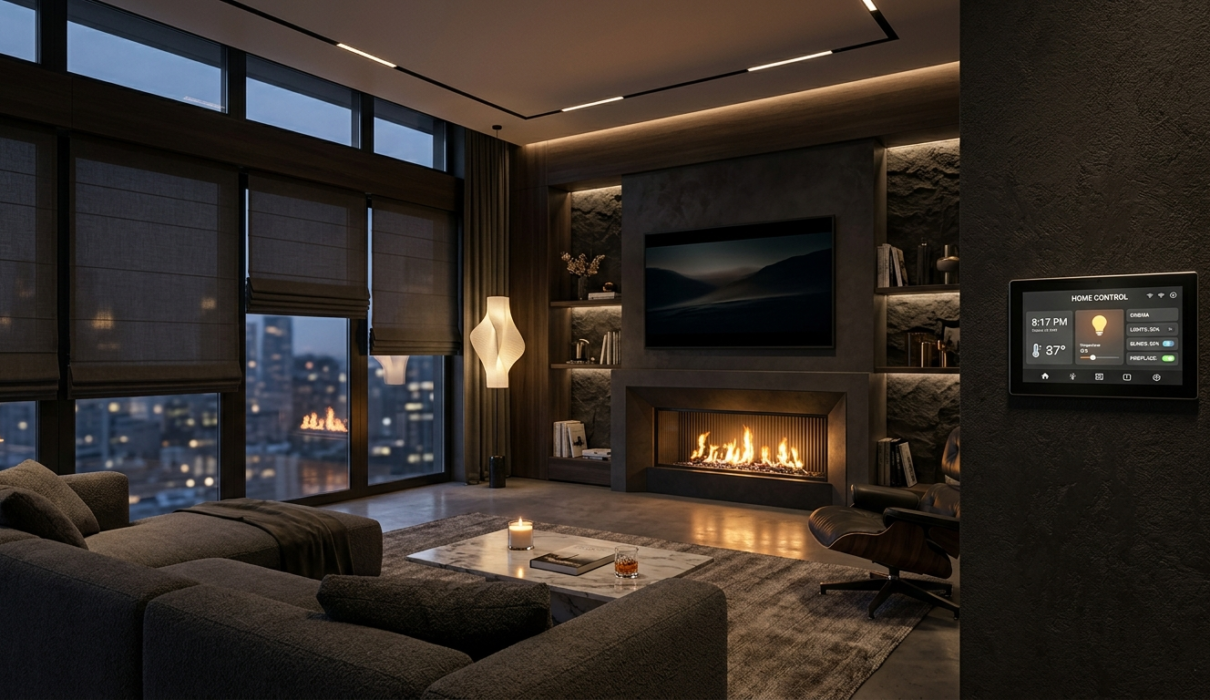
He dimmed the lights, started the fireplace, dropped the blinds, and queued up a movie — all by saying one thing to a panel on the wall. The whole thing took about eight seconds. I stood there with my mouth open.
I’ve been into smart home stuff for a while. Philips Hue, some Lutron dimmers, a couple of Ecobee thermostats. I thought I had a decent setup. But what Dave had was different. It wasn’t a collection of apps. It felt like one coherent system that actually understood what “movie time” meant across every single device in the room.
That was my introduction to Savant home automation. I went home and immediately started researching.
What followed was about eight weeks of reading, configuring, arguing with a dealer, testing, getting frustrated, and eventually landing somewhere I didn’t expect. This is everything I found — the good, the bad, and the stuff nobody mentions in the glossy overviews.
What Savant Home Automation Actually Is
Savant is a luxury home automation platform. Been around since 2005, based in Massachusetts. They started as a Mac-based control system and evolved into a full ecosystem covering lighting, climate, audio, video, security, and networking.
The key thing to understand: Savant home automation is not a consumer product you grab off Amazon. It’s a professional-grade system. You buy it through authorized dealers and integrators. Those integrators design the system, install it, and program it for your specific home.
That’s different from what most of us are used to. When I set up my Philips Hue, I downloaded an app and started adding bulbs. With Savant home automation, someone comes to your house, sits down with you, asks what you want your home to do, and then builds it. It’s more like custom software development than buying a gadget.
That distinction matters a lot. It changes the whole conversation around price, expectations, and who this is actually for.
Who This Is Actually For
Savant home automation is not for everyone. I’m not saying that to be snobby — I’m saying it because I think a lot of people discover it, get excited, and run into a reality check fast.
This makes the most sense if you’re building new construction or doing a major renovation. That’s when running wire and integrating everything from scratch is realistic. Retrofitting an older home can work — Dave did it — but it’s more complicated and expensive.
It also makes sense if juggling five different apps across three different ecosystems has become genuinely exhausting. I’ve talked to people who have four apps just for their lights. Savant solves that completely. Everything lives in one place and it actually communicates with itself.
And there’s the “I want it to just work” factor. I spent a whole weekend once troubleshooting why my Alexa routine wasn’t triggering my Lutron scene correctly. It was a cloud latency thing. I fixed it eventually. Took hours. The people who buy Savant home automation systems generally don’t want to deal with that. They want to press a button and have things happen reliably. Every time.
The sweet spot customer is probably someone who’s already been through the DIY smart home phase and gotten tired of babysitting it. That was me.
The Hardware Nobody Talks About
Most Savant coverage focuses on the app, the scenes, the luxury angle. The hardware is worth paying attention to though, because it’s a big part of why the system feels different in person.
Savant makes their own controllers — called Smart Hosts — which act as the brain of everything. These run locally. A lot of consumer smart home systems are heavily cloud dependent, which means if your internet goes down, your automations go down with it. With Savant home automation, core stuff processes locally. Your scenes still fire even when your ISP is having a bad morning.
They also make their own keypads and remotes. The remotes are backlit, well-weighted, and feel like something worth picking up. I’ve used cheap Z-wave remotes that felt like Happy Meal toys. Savant’s physical controls feel premium. You’d expect that at the price point, but it’s still worth saying.
The app is cleaner than I expected — available on iOS and Android, you can control everything from your phone, set up scenes, check camera feeds, adjust climate, all in one place. Your dealer sets it up to reflect your actual home layout, not some generic template.
Finding a Dealer — Took Longer Than Expected
You go to the Savant website, use the dealer locator, reach out. Quality of dealers varies significantly.
My first call was with someone who clearly wanted to sell me the most expensive possible setup before asking a single question about what I actually needed. I passed on him.
Second dealer was different. He came out, walked the house, asked about pain points — what I hated about my current setup, what I wanted to be able to do without thinking. That’s the right approach.
The quality of your integrator matters more than any feature of the system itself. A bad integrator with a good platform gives you a bad experience. I’d talk to at least two dealers before committing, and pay attention to whether they ask about your life or just start quoting hardware.
The Installation — Two Days, One Regret
Installation took two days. Day one was running some additional wire — my house is older, some areas needed drops. Day two was the actual programming and configuration. My integrator sat at the kitchen table with his laptop for most of the day, building out system logic and asking me questions periodically. “When you say good night, what do you want the house to do?”
Here’s what the two days actually looked like:
- Day one messier than expected, but they cleaned up well
- Programming day two was fascinating to watch if you’re a tech person
- They walked me through the app before leaving — about an hour
- They gave me a quick-reference card for the keypads that I still use two months later
- Follow-up support was quicker than I expected — emailed a question a week later and got a call back same day
My one regret from the installation: I wasn’t specific enough about how I wanted audio to behave in the kitchen versus the living room. We had to go back and adjust programming later. It wasn’t a huge deal but it cost me a service call that probably wasn’t necessary if I’d thought it through in advance.
Be very specific during the design phase. More specific than you think you need to be.
What Savant Home Automation Does in Real Life
This is the part that actually changes how you live in your house. Not dramatically — practically.
Savant’s scene-based approach means you’re not toggling individual devices. You’re calling up states for your whole home. My “morning” scene: bedroom lights ramp up slowly, thermostat bumps to 70, kitchen lights come on, news starts on the kitchen speaker. That all happens because I tap one thing. Or because the clock hits 6:45am.
The “movie” scene — the one that hooked me at Dave’s — in my house now: living room dims to about 20%, fireplace turns on, TV drops into the right input, receiver kicks on with the right settings, shades drop. Done in about eight seconds.
Here’s where Savant home automation genuinely earns the premium: reliability. I’ve been running this for about two months and I can count the failures on one hand. My old Alexa routine setup had hiccups multiple times a week. Sometimes it just wouldn’t do the thing. With Savant, it does the thing.
The geofencing surprised me the most. When I’m about five minutes from home, the house starts waking up — lights in the entry come on, thermostat adjusts, garage opens as I pull in. My old setup tried to do this with an Alexa routine and it was unreliable. Savant’s version works consistently. I don’t know exactly why the difference is so pronounced, but it is.
Mistakes I Made — And What I Heard About From Others
Not interviewing multiple dealers. I almost went with the first guy, who would have oversold me significantly. Getting a second opinion took two extra weeks but was worth it.
Underestimating scope. I went in thinking I wanted to automate “the main living areas.” In practice you start asking questions — does the hallway count? What about the master bathroom? Scope creep is real. Budget for it or be disciplined upfront about what’s in and what’s out.
Almost skipping proper networking. Savant home automation works best on a solid, well-segmented network. My existing mesh system was okay but not great. My dealer flagged this. I upgraded. It made a difference — smoother app response, more reliable device communication. Don’t skip the network conversation.
Not thinking about future devices. I set up the initial system and two months later wanted to add a second TV in the bedroom. It required a service call. If I’d told my dealer upfront “I’ll probably add a bedroom setup eventually,” we could have pre-wired during the initial install. Think ahead — it’s cheaper.
The fifth one I just heard about: treating this like a DIY project. Savant home automation is not a DIY platform. If you buy into this and then try to manage it yourself, you’re going to have a bad time. The whole point is that someone else handles the complexity.
Gear Worth Considering Alongside This Setup
Disclosure: This article may contain affiliate links. If you buy through these links, I may earn a small commission at no extra cost to you.
| Product Category | Example Product Type | Why Needed | Affiliate Angle |
|---|---|---|---|
| Smart Dimmer Switch | Lutron / TP-Link dimmer | Lighting automation | Check best smart switches |
| Smart Thermostat | Ecobee / Nest | Climate control | Buy smart temperature control |
| Mesh WiFi Router | TP-Link Deco / ASUS | Stable automation network | Improve smart home stability |
| Smart Hub | SmartThings / Home Assistant | Device integration | Central control system |
| Voltage Tester | Basic electrical tester | Safe installation | DIY safety tool |
| Wire Stripper | Electrician tool kit | Installation help | Home wiring kit |
Questions People Keep Asking Me
Is Savant home automation worth the price? Depends where you’re starting from. If you’ve sunk time and money into consumer smart home stuff and you’re constantly troubleshooting something — yes, Savant starts making a lot of sense. The reliability alone is worth it for some people. I stopped losing weekend afternoons to debugging. That has real value.
If you’re new to this, start somewhere cheaper first. Philips Hue, a Lutron Caseta dimmer, an Ecobee. See if you actually use it. Upgrade if you outgrow it.
How does Savant compare to Control4? Close enough at a high level that the dealer matters more than the platform. Both are professional-grade, both require integrators, both have reliable local processing. I’d get quotes from dealers for both and see who you trust more. That conversation will tell you more than any spec comparison.
Can I use Savant in a smaller home or apartment? Technically yes. Practically, the value proposition gets harder in a one-bedroom apartment with two light switches. A Nest thermostat and some Hue bulbs will make you happy for a fraction of the price. Bigger homes, more devices, more complexity — that’s where Savant clicks into place.
What if the dealer goes out of business? Legitimate question — I asked it myself. Savant has been around 20 years and runs locally, so basic function doesn’t depend on their servers. The real risk is future support and updates. Worth asking your dealer upfront what happens to support if they close. Good dealers have an answer.
Two Months Later — Honest Verdict
I’m not going to pretend Savant home automation is for everyone. It’s expensive. It requires trusting a third party to design something in your home. There’s less tinkering satisfaction than a DIY setup — and honestly, I kind of miss spending Sunday afternoons messing with automations. That part is a real small loss.
But my house just works now.
My wife can control everything without asking me to help. My parents visited and figured out the keypads in four minutes. The movie scene still gets a reaction from people the first time they see it. Two months in and I’ve had exactly three things that needed any attention — all three resolved with one email to my dealer.
If you’re where I was — deep enough into smart home stuff that the complexity is becoming a burden — Savant home automation is worth a real conversation with a real dealer. Not a casual look. A real conversation with someone who’s willing to understand your house before pitching you a system.
That’s the thing Dave’s setup taught me when I stood there with my mouth open. It’s not about the features list or the spec sheet or even the price. It’s about the eight seconds. When your home does exactly what you want without you thinking about it — that’s what you’re actually paying for with Savant home automation. Whether that’s worth it to you is a personal call, but it was worth it to me.
You Might Also Like
- Best AI Tools for Teachers in 2026 (Actually Useful in Real Classrooms)
- Best AI Avatar Tools for Multilingual Voiceovers (Real Review 2026)
- Affordable AI Recruiting Tools for Small Teams (Honest Review 2026)
- Beginner’s Guide to Mini RC Drift Cars (Real Experience After 3 Years)
- Home Automation Switches for Beginners (Honest 2026 Guide)