

 By
By My name is Jigar and I am the founder of JigTechHub. I usually write articles on topics like technology, tools and finance. Discovering new technologies, learning about gadgets and researching financial topics all this is part of my job. But gardening is not just a subject for me, it is my personal hobby.
A big question for people living in cities these days is – “How to stay connected to nature?” We are living amidst all the amenities, but the experience of the smell of soil, green plants and fresh air is slowly being lost.
At such a time, “Share Gardening” has emerged as a beautiful and simple solution.
I also used to think the same way earlier that “Gardening is only possible in a big bungalow”, but when I started Share Gardening, I realized that even with a few people together, we can connect with nature.
What is share gardening?
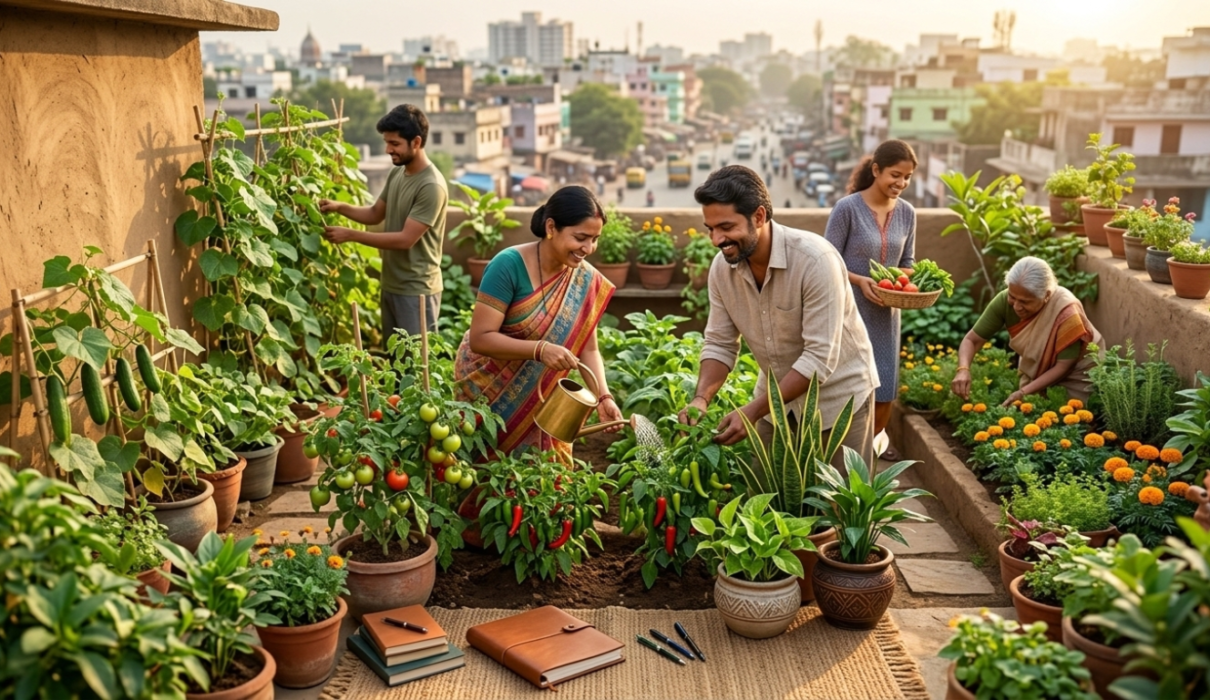
Simply put, when several people come together to create a garden in a space and take care of it, it is called share gardening.
- This space can be anything:
- The roof of an apartment
- A vacant plot in a society
- An open area of a school or office
- Or a friend’s backyard
Everyone contributes a little someone waters it, someone brings plants, someone fertilizes it.
My first share gardening started
There was an empty terrace in my society. Earlier, there was garbage lying there. One day, I thought with two of my friends, why not grow some plants here?
Initially, everyone was skeptical:
“Will this work?”
“Will anyone water it?”
“Will the plants survive?”
But we took small steps:
Brought 5 pots
Planted tomato and chilli plants
Given 10 minutes every morning
Today, that terrace has turned into a beautiful garden
Benefits of Share Gardening
1. Gets peace of mind
When you spend time with plants, the mind gets a different peace. In today’s busy life, we often feel stress and tension, but gardening helps us get out of it. Touching the soil, watering and caring for plants — all this feels like a kind of therapy. If you do gardening even for a short time, the mind becomes relaxed and you get positive energy.
2. Fresh and organic vegetables
There is something special about eating vegetables grown with your own hands. Vegetables available in the market often contain chemicals and pesticides, while in home gardening you can grow them completely organically. This gives you more delicious, fresh and healthy food. Also, you know what you are eating — which is a big deal.
3. Increases community engagement
Share gardening is not just about growing plants, but is a wonderful way to connect people. When people garden together, communication increases, new relationships are formed, and trust increases. People who were strangers before become friends. In this way, a small garden can bring the entire community closer.
4. Beneficial for the environment
Growing more plants and trees benefits the environment a lot. It purifies the air, reduces temperatures, and increases greenery around. Gardening is very helpful in combating the increasing pollution in cities. Even if we start gardening at a small level, we can contribute to saving the environment on a large scale.
How to start share gardening?
If you also want to start share gardening, then there is no need to worry. You can easily get started by following a few simple steps:
1. Choose the right place
First of all, choose a place that gets good sunlight. Most plants need at least 4–5 hours of sunlight a day. It can also be your gallery, terrace or an empty area in the society. Choosing the right place will help your plants grow well.
2. Talk to people
Share gardening is more fun and easier to do in a group than alone. Talk to your friends, neighbors or people in the society and encourage them to join. Working together divides the responsibility and also creates a good community bond.
3. Start small
Don’t get excited and plant too many plants in the beginning. Start with 4–5 simple plants first. As you gain experience, gradually expand your garden. This way you will be able to learn better without getting overwhelmed.
4. Choose easy plants
To start, choose plants that grow easily and do not require much care. Such as: Tomatoes, chilies, fenugreek and coriander all of these are best for beginners. These plants give you quick results, which also increases your enthusiasm.
5. Water and care regularly
Consistency is very important in gardening. Take some time every day to water the plants, check their condition and take the necessary care. Remember, plants are also living things they need both love and attention. The more care you give, the better the results you will get.
Common Challenges and Solutions
It is common to encounter a few challenges in share gardening at the beginning. But if handled correctly, they can be easily resolved:
No time – Many people join enthusiastically at the beginning, but then due to lack of time, they cannot focus on gardening.
Solution: Do not do the work alone, but divide it into groups. Give each person a day or a small responsibility. This way, no one person will be burdened and the garden will be maintained regularly.
Plants dry – Sometimes, giving too little or too much water can cause plants to dry out or become damaged.
Solution: Set a fixed time for watering — such as morning or evening. Be aware that too much water can also be harmful. Just keeping the soil slightly moist is enough.
People lose interest – Initially, everyone is very enthusiastic, but over time, interest decreases.
Solution: Celebrate small successes like when the first tomato grows or a plant blooms. Sharing happiness together keeps people motivated.
Some useful tips for share gardening
These tips will definitely help you to make share gardening easier and more effective:
Use plastic bottles (DIY planters)
Instead of throwing away plastic bottles lying around the house, you can use them as planters. This is a cheap and eco-friendly option. Cut the bottle and put soil and plants in it this is very useful, especially for small plants.
Make compost from kitchen waste
Waste from the kitchen such as vegetable peelings, fruit peels is all useful for making compost. This will give you organic fertilizer and reduce waste. This is an easy and natural way to nourish your garden.
Use rainwater
Rainwater is very good for plants, as it contains fewer chemicals. You can collect rainwater and use it for gardening. This also saves water.
Choose plants according to the season
There is a suitable season for every plant. If you choose plants according to the season, they will grow better and require less maintenance. This will give you better and faster results.
Why is gardening necessary in the city?
In today’s era of pollution, stress and fast lifestyle, gardening is not just a hobby it has become a necessity. In cities where concrete is more common, creating a little greenery is very important for our lives.
Gardening brings us closer to nature, gives peace of mind and gives us some relief from the daily hustle and bustle. Spending some time with plants after a tiring day is like refreshing yourself.
To be honest, when you wake up in the morning and look at your plants, you feel a different joy. Gradually, this becomes a habit I even like watering my plants before making tea
Gardening in the city is a small but important contribution not only for you, but also for the entire environment.
Share Gardening for Kids
If you involve kids in share gardening, it can be a fun and learning experience for them.
Learns about nature
When kids plant and take care of plants themselves, they start to understand nature closely. How plants grow from seeds they get to learn all this live.
Stays away from mobiles
These days, kids spend more time on mobiles, but gardening keeps them away from screens. They come out and do something creative and productive.
Learns responsibility
When you give kids the responsibility of watering or taking care of plants, they learn to take responsibility. The feeling of “this is my plant” inspires them to take more care.
We have even seen it in our society young children themselves water, take care of plants. That sight is truly heart-warming
Share gardening in the future
Share gardening is sure to become more popular in the coming times and there are many good reasons behind it.
Space is running out
Living space in cities is gradually decreasing. Not everyone has the space to have their own garden, so share gardening can be a smart solution where people share a space together.
People are becoming health conscious
These days, people have become more aware of their food. The desire to eat organic and fresh is increasing, and share gardening is a good option for that.
The desire to connect with nature is increasing
Amidst fast lifestyles, people now want to get closer to nature again. Gardening gives them peace, balance, and happiness — which is what they need the most today.
In the end…
Share gardening is not just a project to grow plants it grows relationships between people, spreads happiness and makes life a little more beautiful.
This small garden gradually brings not only greenery, but also friendship, cooperation and positivity. The fun of working together and the plants growing together both are heart-warming.
If you plant a small plant today, maybe it won’t just be a plant. it can be a new beginning in your life
To be honest, for me this is no longer just a hobby it has become a therapy, where I can rediscover myself
Also Read This: –
- Do Junipers Make Good Bonsai Trees? Complete 2026 Guide
- Acer Palmatum Japanese Maple Bonsai – Complete Care Guide for Beginners – 2026
- Permaculture Garden: A Complete Beginner’s Guide to Sustainable Living at Home- 2026
- Top 21 Garden Remedies to Grow at Home – Natural Health & Beauty Tips
- Bonsai Starter Kit for Beginners: Complete Guide to Growing Your First Bonsai at Home – 2026
FAQ
1. Do you need to get legal permission for share gardening?
This depends on your place. If you are gardening on your own terrace or private space, then usually no permission is required. But if it is a society, apartment or public space, then it is better to first take permission from the management or owner.
This way, there will be no problems and everything can run smoothly
2. What to do if a member does not work?
Such a situation comes up in almost every group sometimes First of all, talk calmly and try to understand why he is not participating. If the problem still persists, then divide the work a little more easily or adjust it between other members.
What is important in share gardening understanding and teamwork
3. What to do if pests get in the plants?
This is a very common problem, but there is no need to worry. You can also get rid of pests with home remedies, such as:
- Spraying Neem oil
- Making a garlic and chilli spray
- Checking the plants regularly
In my experience, if you pay attention on time, it doesn’t become a big problem
4. How many people are ideal in a group?
Generally, a group of 4 to 8 people works very well. If there are fewer people, the workload increases, and if there are too many people, coordination becomes difficult.
So a medium-sized group is best
5. What to do if there is a shortage of water?
Water problems are common in cities, but there are solutions for that too:
- Collect rainwater
- Use a drip irrigation system
- Water in the morning or evening so that water can be saved
- Choose plants that require less water
If you do a little planning, even the water problem can be easily handled
3 Comments