

 By
By Companion Planting for Okra: For many people, gardening is more than just a hobby. The activity provides mental relaxation while people establish stronger bonds with the natural world. Our garden needs more than water and fertilizer to successfully grow vegetables. Plants require suitable neighbouring plants because they receive similar advantages as humans do from their social connections. Companion Gardening serves as the basic concept which people use to create their gardens. The method demonstrates its most effective results when applied to okra and other specific vegetable types.
Many gardeners have observed that okra plants will develop better when they are grown with appropriate companion plants because this combination results in stronger growth and reduced pest issues and improved overall crop yield. The article will explain the concept of Companion Gardening and provide information about suitable companion plants for Okra and the plants that should not be used.
What is Companion Gardening?
Companion gardening refers to a gardening technique which involves growing multiple plant species together to create beneficial relationships between their different growth patterns. This concept has existed since ancient times. Farmers have been using similar practices for generations without even calling it Companion Gardening. They observed that certain plants exhibited improved growth when positioned close to particular plant species.
The garden contains three types of plants which protect against pests and enhance soil quality and draw bees for their pollination activities. The garden establishes its own natural ecosystem through the growth of appropriate plant combinations.
This method works well for growing okra. Okra requires warm temperatures and direct sunlight to grow its best. The plant maintains its health when it grows together with suitable companion plants.
Why is Companion Gardening for Okra Necessary?
Many beginner gardeners believe it is easier to grow only one type of plant in a bed. However, nature usually works differently. Natural plant communities better maintain environmental balance which results in healthier plant growth. Companion Gardening enables plants to grow better together because they provide mutual support for their development. The garden will benefit from this method because it enhances plant growth and decreases pest issues while creating a lively atmosphere.
Some important benefits of Companion Gardening for Okra are as follows.
1. Protection from pests
Many plants use their scent and their sap to repel insects. The plants marigold and basil and coriander together protect their area from dangerous insects. Okra plants experience less damage from aphids and whiteflies when these plants grow nearby.
2. Improves soil quality
Some plants play a significant role in boosting soil health. Take chickpeas, peas, and similar legumes; they contribute essential nutrients like nitrogen to the earth. When okra grows close to these leguminous friends, it benefits greatly. The result? Enhanced nutrition leads to quicker growth and overall better health for the okra.
3. Increases pollination
Flowering plants often attract bees, butterflies and other helpful pollinators to the garden. When these creatures come to the garden, they help in pollination from one plant to another. Due to which the production of fruits and vegetables increases. This is also very beneficial for okra.
4. Better use of space
Companion gardening involves planting plants of different heights and growth. Some plants spread out on the ground while some grow tall. In this way, the garden space is used more efficiently. For example, okra grows tall while smaller plants like spinach or fenugreek can grow low.
5. Retains moisture
Some groundcover plants keep the soil covered. Due to which moisture remains in the soil for a long time and the water does not dry out quickly. This is especially useful for okra during the hot season.
6. Collaboration in plant growth
When grown with the right plants, they help each other grow. Some plants keep pests away, some improve the soil and some help in increasing pollination. The combination of all these makes the okra crop stronger and more productive.
Companion gardening offers great advantages, not just for okra but for the whole garden. When we pick compatible plants, we essentially foster a healthier environment that aligns more with nature.
Great Plants to Pair with Okra
Let’s explore some plants that thrive alongside okra. Selecting suitable companion plants for okra results in improved growth and reduced pest problems while creating a balanced garden ecosystem. The following list presents multiple plants that grow successfully with okra.
1. Marigold (Galgota)
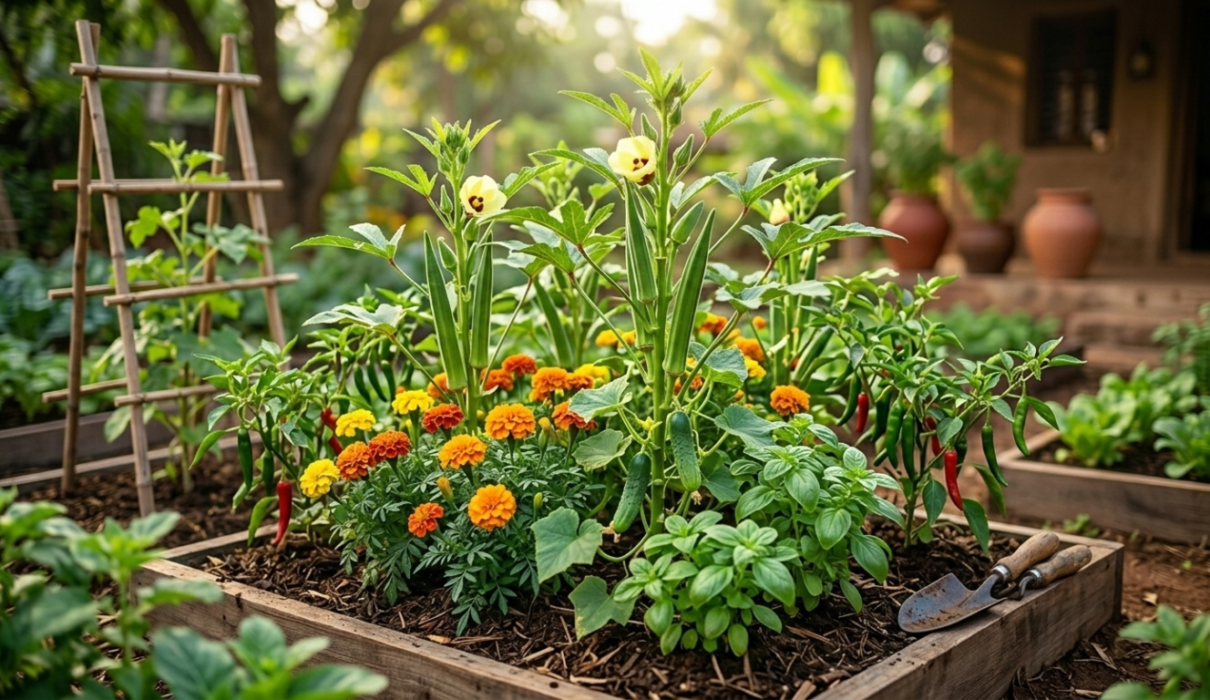
Marigold is one of the most popular companion plants used by gardeners. Its strong aroma keeps many types of pests away. This plant is especially helpful in controlling pests like aphids, whiteflies and nematodes. The roots of Galgota release natural elements that reduce harmful pests in the soil. Therefore, Okra plants get more protection.
Planting marigolds near okra not only helps reduce pests but also adds bright color to the garden. Many gardeners also recognize Galgota as a natural insecticide plant.
2. Basil
Bulsi is not only useful in the kitchen, but is also very beneficial in the garden. Its strong aroma helps to keep away some harmful insects. Basil also attracts pollinating creatures like bees and butterflies. Due to which natural pollination increases in the garden and the plants remain healthier.
Planting basil with okra creates a fragrant atmosphere in the garden and often results in better plant growth. Many people call the combination of okra and basil a healthy garden combination.
3. Cucumber
Cucumber vines spread across the ground and act like a natural ground cover. When okra grows tall, the cucumber vine covers the ground. Due to this, the soil moisture is maintained for a long time and the soil does not dry out quickly. This proves to be very useful especially during hot days.
Growing cucumbers with okra can also help make better use of garden space. Growing both tall and spreading plants in the same bed also improves the microclimate.
4. Chillies or Capsicum
Both chillies and okra require almost the same type of weather, sunlight and water. Therefore, both these plants can grow easily in the same bed. Both these plants like warm weather and well-drained soil. Therefore, growing them together also makes the garden easier to maintain.
When different vegetables grow together in the garden, it looks more lively and natural. Also, having different plants also maintains a balance of pests.
5. Green leafy vegetables
Green leafy vegetables like spinach, lettuce or fenugreek can grow well with okra. Because these plants grow quickly and are ready for harvesting in a short time. This green vegetable grows on the ground when the okra plants are still small. Then, they are harvested when the okra grows up.
In this way, two types of crops can be grown on the same land. This method is often called Intercropping, which proves to be very useful in small gardens.
Which plants should not be planted with okra?
Companion gardening is not only about selecting the right plants. There are also some plants that are not suitable for okra. Such plants can slow down the growth of okra, compete for nutrients or attract similar pests.
If these plants are planted near okra, both the quality and yield of the crop can be affected. Therefore, knowing which plants not to plant with okra is equally important when planning a garden.
1. Potato
Potato is a soil-grown crop and requires a lot of nutrients. While okra also requires nutrients for good growth. Therefore, there can be competition for nutrients between the two plants. In addition, potatoes often attract pests that can also be harmful to okra. For example, some soil-borne pests and fungi can affect both crops.
Because of this, gardeners usually prefer to plant potatoes and okra in separate beds or at a small distance.
2. Fennel
Fennel functions as a special plant to use in Companion Gardening. Many gardeners believe that fennel can slow down the growth of some nearby plants. Fennel roots release natural juices which sometimes hinder the growth of plants that grow close to them. The plant should be planted in a different area because it needs separate space.
Fennel planted close to okra will cause the plant to experience either slower growth or incomplete development.
3. Corn
Both corn and okra are tall growing plants and both need sufficient sunlight. If the two are planted too close, they can compete for sunlight. In some cases, corn also attracts pests that can damage okra plants. Therefore, it is better to keep a proper distance between the two crops.
4. Eggplant
Eggplant and okra can be susceptible to the same types of pests and diseases. If both are planted together, the pests can spread quickly. For example, aphids and some types of insects can affect both crops. Therefore, gardeners often plant eggplant and okra at a distance.
Tips for Successful Companion Gardening for Okra
If you are planning to try Companion Gardening in your own garden, there are a few simple things to keep in mind.
Maintain Proper Spacing
Okra grows tall quickly. Therefore, adequate spacing should be maintained between the plants so that each plant gets sunlight.
Adequate Sunlight
Okra grows best in warm and sunny weather. It should receive at least 6 to 8 hours of sunlight per day.
Regular Watering
It is important to keep the soil moist, but avoid overwatering.
Use Organic Fertilizer
Compost or natural fertilizer makes the plants healthier.
Keep an Eye on Pests
Although Companion Gardening reduces pests, it is still necessary to check the garden periodically.
Companion Gardening in a Small Garden
Even if you don’t have a large garden, this method can be easily adopted. Many people grow okra in their small courtyard or terrace garden. Planting plants like basil, chilli or galgota with okra in a small bed makes the garden look more beautiful and the plants also stay healthy.
A beautiful way to connect with nature
Companion Gardening is more than just a technique for increasing yield. It is a beautiful way to understand nature and live in balance with it. When we grow different plants together, a small ecosystem is created in the garden. In it, insects, bees, birds and plants all help each other.
This method can also be very effective for common vegetables like okra.
Also Read This: –
- Do Junipers Make Good Bonsai Trees? Complete 2026 Guide
- Acer Palmatum Japanese Maple Bonsai – Complete Care Guide for Beginners – 2026
- Permaculture Garden: A Complete Beginner’s Guide to Sustainable Living at Home- 2026
- Top 21 Garden Remedies to Grow at Home – Natural Health & Beauty Tips
- Bonsai Starter Kit for Beginners: Complete Guide to Growing Your First Bonsai at Home – 2026
Conclusion
People find it easy to grow okra yet Companion Gardening offers superior results. The optimal combination of plants achieves three main benefits which include pest control and soil enhancement and garden ecosystem development.
Okra grows best when it is planted together with galgota and basil and cucumber and chillies. The two types of plants which should not be used together with okra are potatoes and fennel.
Companion Gardening with okra serves as an excellent initial gardening experience for people who want to explore new techniques. Your garden will achieve its full natural beauty through dedicated care of your garden and thorough planning and your appreciation of nature..