

 By
By My name is Jigar and I am the founder of JigTechHub. I usually write articles on topics like technology, tools and finance. Discovering new technologies, learning about gadgets and researching financial topics all this is part of my job. But gardening is not just a subject for me, it is my personal hobby.
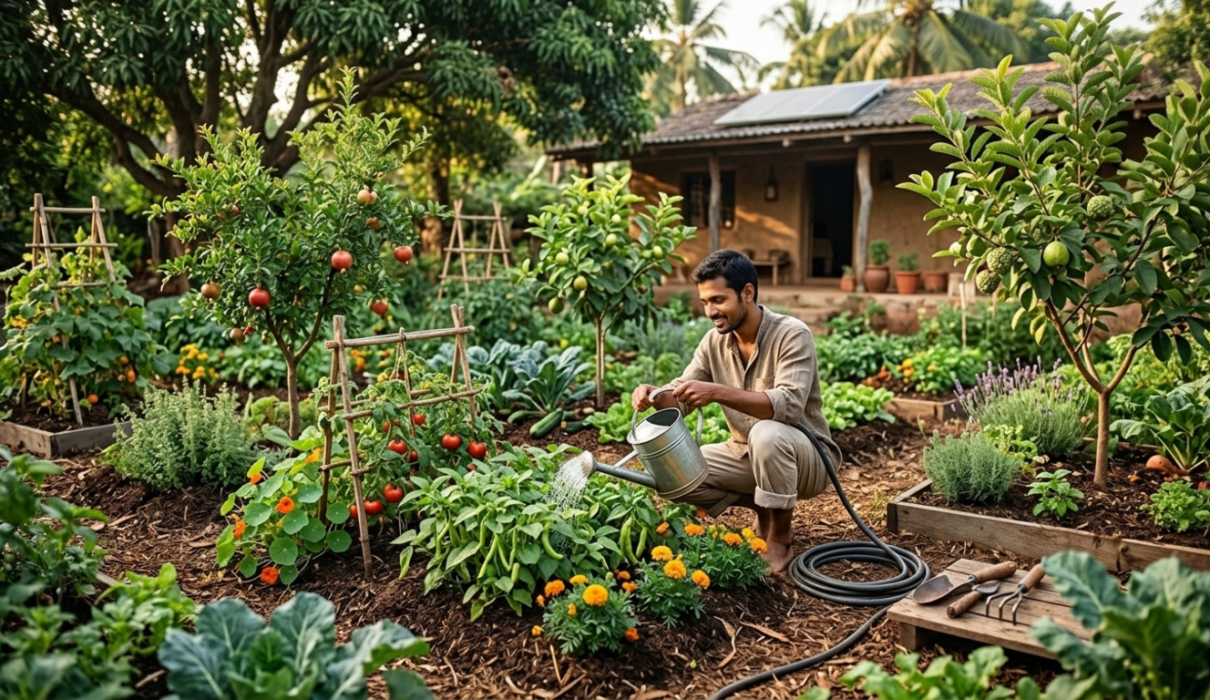
Nowadays, we all hear about “sustainable living” and “organic food”. But the truth is that the way our grandparents farmed was the very idea of living in harmony with nature. Permaculture garden is the modern and scientific form of the same ideology.
In this article, we will try to understand what Permaculture Garden is, how to start, its benefits, design, and how it can be adopted in a climate like ours, Gujarat, in very simple language.
What is Permaculture?
The term Permaculture comes from “Permanent Agriculture”. Bill Mollison and David Holmgren developed this philosophy in the 1970s. Their aim was to create a farming and lifestyle that would last for a long time and not harm nature.
Simply put, Permaculture is a system of farming and gardening that mimics nature. Just as there are no chemical fertilizers or pesticides in the forest, yet the trees there remain healthy for years – permaculture works on the same principle.
3 main principles of permaculture
(Not just a principle, but a sensitive way of living)
1️. Earth Care
Soil, water, air these three elements are not just resources, they are the breath of our life. Just as a mother nurtures us, the earth provides us with food, water and shelter.
Caring for the earth means –
- Keeping the soil alive
- Using water with respect
- Protecting trees and animals
When we protect the soil from chemicals like drugs, it remains fertile and healthy for generations to come. This is not only for the environment, but for our own future.
2️. People Care
Nature and humans are not separate from each other. Caring for people means ensuring that everyone gets enough food, health and respect. But also remembering that We live without abusing nature.
True prosperity lies in the fact that there is cooperation in society, sharing with neighbours, and a healthy lifestyle develops in both villages and cities.
3️. Fair Share (Equal Sharing)
Using only what is necessary this is not limitation, this is culture. If we have more, then share it because nature is for all, not just for a few.
This principle teaches us:
- Not greed, but balance.
- Not hoarding, but participation.
How to Design a Permaculture Garden?
Creating a permaculture garden is not just about planting seeds. It is a thoughtful plan where every plant, every corner, and every activity has a purpose.
When designing a garden, you need to think about:
👉 Where do I go every day?
👉 Which plants need the most care?
👉 Where will the water come from and where will it go?
The most important part of this plan is the zone system
1. What is the zone system?
In permaculture, the land is divided into zones 0 to 5. This division is based on distance and attention. Where you spend the most time is where the things that require the most care are placed.
Zone 0 – Your Home
This is the heart of your garden. It all starts here.
- Kitchen
- Water usage
- Compost kitchen waste
This is where the permaculture lifestyle begins energy saving, water saving, and conscious living.
Zone 1 – Plants that you visit every day
The area near your home.Where you visit every day.
Plant here:
- Fenugreek
- Green chillies
- Coriander
- Tulsi
These plants need daily watering, pruning, and care so it’s easier if they’re nearby.
Zone 2 – Vegetable area
Plants that require a little less attention here.
- Tomatoes
- Eggplant
- Okra
- Cabbage
A visit 2-3 times a week is enough.
Zone 3 – Grains or major crops
This area is large.
- Wheat
- Corn
- Sorghum
You don’t need to visit here every day. Seasonal care is enough.
Zone 4 – Semi-wilderness
Less human intervention here.
- Fruit trees
- Wood
- Medicinal plants
This area teaches coexistence with nature.
Zone 5 – Completely natural area
- No intervention here.
- This is nature’s own area.
- Here we only observe.
Birds, insects and wild plants follow their natural life cycle. This zone teaches us That we are not the owners of nature, but a part of it.
What are the benefits of this system?
- Saves time
- Proper use of water and energy
- Less effort
- Balanced life with nature
Designing a permaculture garden means Connecting heart, mind and nature together.
When designed wisely, a garden doesn’t just provide food. it also provides peace, balance, and contentment.
2. Companion Planting
There’s a beautiful idea in permaculture plants can be friends too. Just as good neighbours help each other, planting some plants together provides protection, nourishment, and support.
Companion Planting means thoughtfully planting plants together that
- Keep pests away
- Improve soil health
- Increase yields
- Make good use of space
Tomato + Basil
The scent of basil keeps some pests away. Tomatoes are less likely to get pests and taste better. This pairing is very popular in small home gardens both in the kitchen and in the ground!
Corn + Peas
The corn grows tall and supports the peas to climb. The peas add nitrogen to the soil, which is beneficial for the corn. This is a beautiful example of a natural partnership One supports, the other nourishes.
Carrot + Onion
The strong aroma of the onion repels some pests that come near the carrot. Both grow at different depths in the soil, so there is less competition for nutrients.
What is the biggest benefit of Companion Planting?
- Less need for chemicals
- Soil stays healthier
- Crops grow stronger
- Garden becomes more balanced
This method teaches us In nature, cooperation is more powerful than competition. When we plant companion plants, the garden not only grows it stays alive and happy
3. Water Management
Water is not just a resource it is the basis of life. In many parts of the world, rainfall is limited, and in some areas, it is abundant. But one thing is true everywhere: every drop is precious. Water management in a permaculture garden is about managing water wisely and responsibly not “getting more” but “preserving what we get.”
Rainwater Harvesting
- Rainwater is collected and used instead of letting it run off.
- Collecting water from the roof into a tank
- Creating swales or ditches to drain water into the ground
- Creating a small pond or cistern
In this way, raindrops nourish the soil and are stored for the future.
Mulching
Leaving the soil uncovered allows moisture to evaporate more quickly.
In mulching:
- Dry leaves
- Grass
- Crop residues
- Wood chips
- The soil is covered.
Benefits:
- Moisture is retained for a longer time
- Temperature is balanced
- Weeds are reduced
- Soil biological activity increases
Mulching means soil care — with gentleness and understanding.
Drip Irrigation
- Water is slowly delivered directly to the roots.
- Less water wastage
- Irrigation in the right amount
- Healthy plant growth
This method is extremely effective in increasing water efficiency.
Main idea
- Permaculture teaches that there should be respect for water.
- When water is managed wisely,
- the soil becomes more alive,
- the plants become stronger,
- and the garden becomes more stable and sustainable.
- Saving water is not just a technique it’s a global responsibility.
Making Compost
What could be the easiest and most effective way to start permaculture? The answer is turning waste into wealth. Kitchen waste is not really “waste”. It is a treasure trove of nutrients for the soil.
What can be used?
- Vegetable peels
- Fruit peels
- Tea powder
- Coffee grounds
- Dried leaves
- Grass
All of these can be combined to make natural compost.
How to make compost?
1️. Dig a small hole in the ground or keep a bin/container.
2️. Place moist (green) waste and dry leaves (brown) in the compost.
3️. Sprinkle some soil on top.
4️. Maintain light moisture and shake it occasionally.
In a few weeks/months it turns black, fragrant and brown This is ready-made natural fertilizer.
What are the benefits of compost?
- Reduces waste
- Increases soil fertility
- Reduces the need for chemical fertilizers
- Activates bacteria and earthworms in the soil
Composting is not just a farming method it is a way to understand the cycles of nature. What we eat, its remains go back into the soil, and the soil feeds us again. This cycle is the beauty of permaculture.
The 7 Layer System of Permaculture Garden
If you look closely at the forest, you will understand that nature never works on a single layer. Tall trees, shrubs below, grass on the ground, and roots underground all together, in one place Permaculture gardens also follow this same natural structure.
This is called the 7 Layer Permaculture Garden System
This method makes full use of the same space you get more and more diverse products from less area.
1️. Tall trees (Canopy Layer)
This is the topmost layer.
Example:
- Guava
- Mango
- Coconut
- Almond
These trees provide shade, protect the soil, and bear fruit in the long run.
2️. Small trees (Sub-Canopy)
Slightly smaller than tall trees.
- Lemon
- Cumin
- Chickpea
These bear fruit at a medium height and create a balance with the top layer.
3️. Shrub Layer
- Currants
- Pomegranates
- Rosemary
Shrubs fill in the middle of the soil and add variety.
4️. Herbs (Herb Layer)
- Tulsi
- Coriander
- Parsley
- Mint
This layer stays close to the ground and is useful for everyday cooking.
5️. Ground Cover (Ground Cover)
Keeping the soil uncovered this is the main idea.
- Sweet Potato
- Strawberries
- Green Grass
These keep the soil moist and reduce weeds.
6️. Root Crops (Root Layer)
Crops that grow underground.
- Carrots
- Beets
- Yam Beans
- Potatoes
These use the underground layer of the soil.
7️. Valleys (Vertical / Climber Layer)
- Grapes
- Peas
- Cucumbers
- Gourds
These use the empty space by climbing up.
What are the benefits of this system?
- More production in the same space
- Increased diversity
- Soil remains healthier
- Natural balance is maintained
- Full use of water and sunlight
This method teaches us Nature is never the same, it works in layers and cooperatively. When a garden adopts a forest-like structure, it does not just provide food. It becomes a living, balanced and self-sufficient system.
How to get started? (Beginner Guide)
If you want to start your permaculture journey, remember a big start is not necessary, a precise start is. Even small steps connect you to nature.
1. Choose a small space
You don’t have to have a farm.
- Balcony
- Terrace
- Small patio
- A window seats
It’s important to start, not the size. A small space is great for you to learn and understand.
2. Start with 4–5 simple vegetables
Choose easy and fast-growing plants to start with:
- Fenugreek
- Coriander
- Green chilies
- Tomatoes
- Spinach
The joy you get when you pluck the first leaf you grow with your own hands will motivate you to keep going.
3. Make Compost
Start making natural compost from kitchen waste. This will keep the soil healthy and your garden cycle complete. There is a joy in turning waste into wealth.
4. Spend some time in the garden every day
- Just watering is not enough.
- Observe the plants
- Look at the condition of the leaves
- Check the soil moisture
Spending a few minutes in the garden every day will help you build a closer relationship with nature.
Final thought
Remember Permaculture is not a competition, it is a journey. Here “more understanding” is more important than “more production”. Learn slowly, make mistakes, improve and have fun. When you connect with the soil, not only will the garden grow, something new will grow inside you too.
Also Read This: –
- Do Junipers Make Good Bonsai Trees? Complete 2026 Guide
- Acer Palmatum Japanese Maple Bonsai – Complete Care Guide for Beginners – 2026
- Juniper Bonsai Tree Guide – Care, Types, Benefits & Personal Growth Story(2026)
- 21 Essential Gardening Tools
- Bonsai Starter Kit for Beginners: Complete Guide to Growing Your First Bonsai at Home – 2026
The Human Touch
When you press a tiny seed into the soil with your hand, it may not look like much from the outside, but a quiet miracle has begun inside. The joy, wonder, and satisfaction that comes when a small green leaf breaks through the soil a few days later cannot be fully expressed in words. In that moment, not only does a plant grow, but with it also grows hope, faith, and a deep connection to nature.
Permaculture gardens teach us patience. Here, not everything is given immediately; here, we have to wait, observe, and understand. In the process, we learn that there is no need to fight nature cooperation is the right way. When we give the soil time, respect the water, and even consider the insects as an important part of the cycle of life, the garden is no longer just a place to grow, but a living family.
If we start small today in a pot, on a balcony, or in a small corner we can provide the next generation with clean air, healthy soil, and pure, nutritious food. Permaculture is not just farming; it is a message grow with love, live with cooperation, and create a future with responsibility.
Conclusion
A permaculture garden is not just a method of farming it is an idea, a way of life. It is the art of living in balance with nature. If you also start with a small space near your home, in a few years you will be able to see how nature becomes your friend. Plant a seed today maybe that seed will change your life too.
Faq..
1. What is the difference between a permaculture garden and an organic garden?
Ans. Many people believe that permaculture and organic gardens are the same, but in fact there is a slight difference between the two. In an organic garden, we do not use chemical fertilizers and pesticides, meaning we grow food naturally. While permaculture is not just a method of avoiding chemicals, it is a complete system. It involves garden design, water management, plant selection, soil care, and maintaining a natural balance. In simple terms, organic means “farming without chemicals,” while permaculture means “a complete and balanced system like nature.”
2. Can I create a permaculture garden on a small space or terrace?
Ans. Yes, you can definitely create one. It is not necessary to have a large land for permaculture. Even if you have a balcony, terrace, or a small space near the house, you can start. It is more about proper planning and design than space. You can do mixed planting, make compost and start with a few seasonal plants. The truth is that small beginnings make big changes. Gradually the garden grows and gives you the unique pleasure of connecting with nature.
3️. How much does it cost to start a permaculture garden?
Ans. Many people think that this will cost a lot, but in reality it can be started with very little cost. You can make compost from kitchen waste, use local and seasonal seeds and use old cans or pots. Creativity and understanding are more important than cost in this method. In the long run, permaculture gardens save money, because you need to buy vegetables from outside less.
4️. Are pesticides used in permaculture?
Ans. Permaculture does not usually use chemical pesticides. Instead, natural and eco-friendly methods are adopted. Companion planting provides protection to plants, uses natural solutions like neem oil, and controls pests through biological methods. This keeps plants healthy and soil health is maintained.
5️. How long does it take to see results from a permaculture garden?
Ans. Permaculture is a natural process, so patience is essential. Small results usually start appearing in two to three months, such as green leaves, small flowers, or vegetables. But it may take a little longer to become a completely healthy and self-sustaining system. This is not a competition, but a journey. When you spend some time in your garden every day, you realize that nature works slowly but surely.
6. Is permaculture only for farmers?
Ans. Absolutely not. Permaculture is not limited to farmers. City dwellers, working people, housewives or students anyone can adopt this method. If you want to connect with nature and live a healthy life, then permaculture is for you. It is not just a way of gardening, but a way to make life easier and more balanced.